What a High-Converting Website Actually Looks Like
A practical breakdown of what separates a visually appealing website from a genuinely high-converting one, and why most business websites fail to generate leads despite having traffic. This guide explains the core structure, UX principles, and psychological triggers that turn a website into a conversion system rather than just a digital brochure.
Table of Contents
Introduction: Why Most Websites Don’t Convert
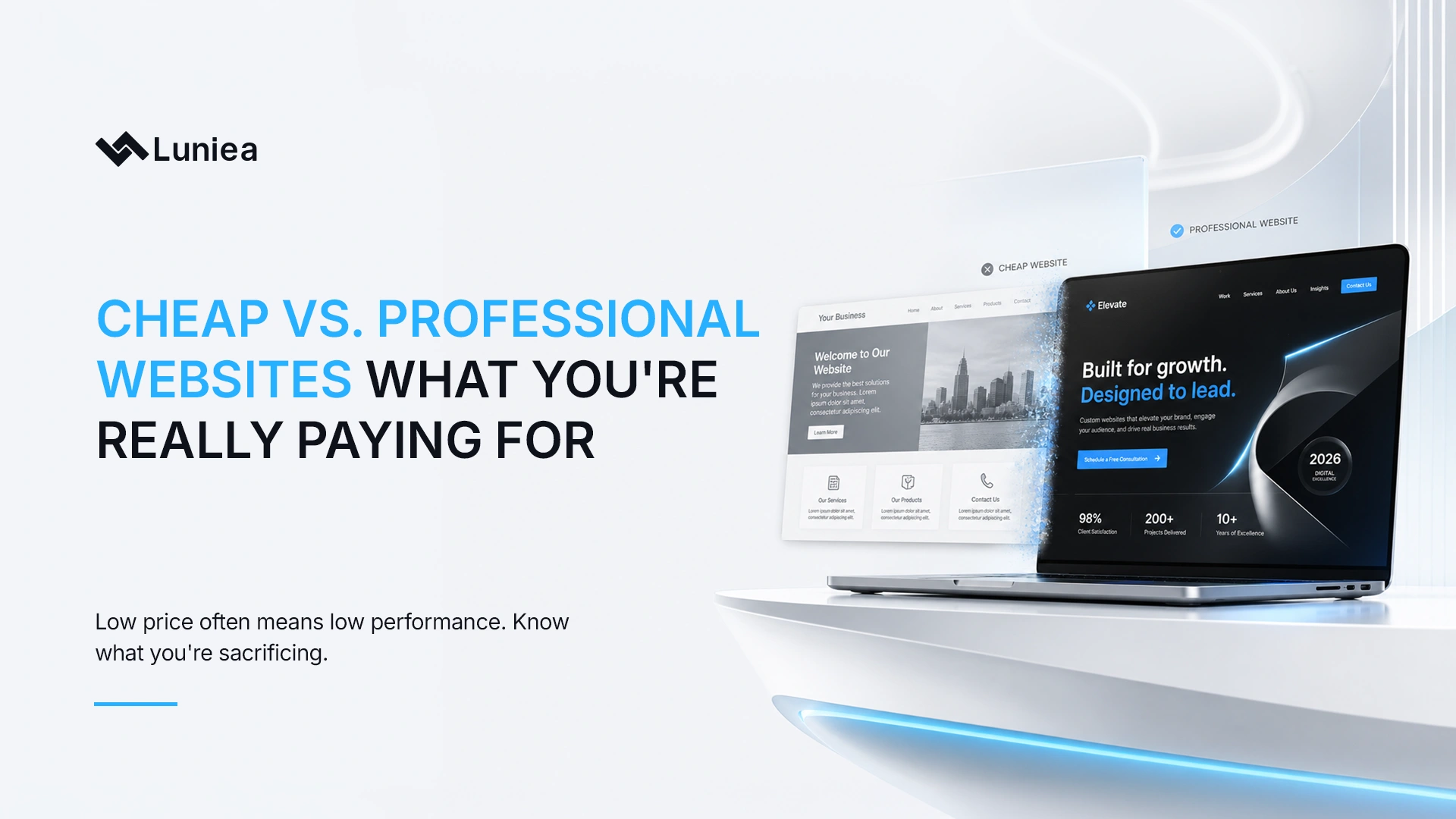
Most business websites fail not because they look unprofessional, but because they are not built with conversion intent in mind. They often prioritize design aesthetics, animations, and general information over clarity, structure, and user decision-making flow. As a result, even when traffic is generated through SEO, Google Ads, or social media, users visit the website but leave without taking any meaningful action.
The core issue is that most websites function as digital brochures rather than structured conversion systems. They present information but do not guide users toward a specific outcome. In digital marketing, this creates a major gap between visibility and revenue, where businesses appear active online but struggle to generate consistent leads.
A high-performing website is not defined by how it looks, but by how effectively it converts attention into action. Understanding this difference is the first step toward building a system that supports real business growth.
What Is a “High-Converting Website”?
A high-converting website is a strategically designed digital system that guides users toward a specific action, such as filling out a form, booking a service, or making a purchase. Unlike traditional websites that focus on information delivery, conversion-focused websites are built around user behavior, intent, and decision-making psychology.
Every element on a high-converting website serves a purpose. The structure is intentional, the messaging is clear, and the user journey is simplified to reduce friction at every stage. Instead of overwhelming visitors with options, it directs them toward a single, well-defined goal.
In performance marketing systems involving SEO, PPC ads, and content traffic, a high-converting website acts as the central engine that transforms traffic into measurable business outcomes.
The 5 Core Elements of a High-Converting Website
High-converting websites are built on a foundation of five essential components that work together to influence user behavior and improve conversion rates.
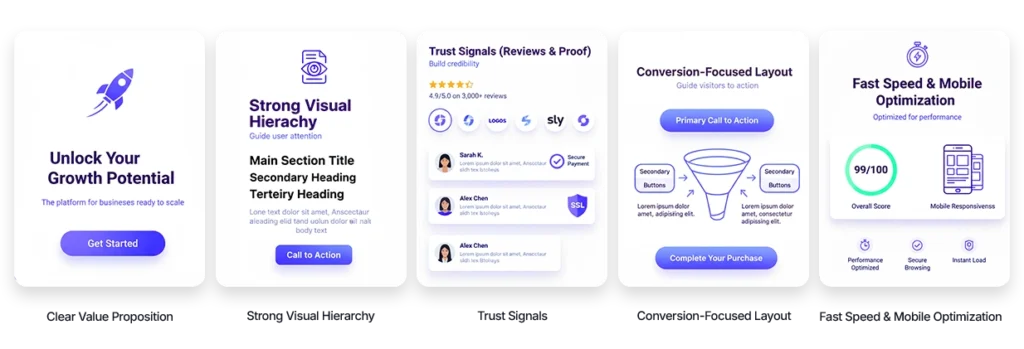
1. Clear Value Proposition
The value proposition is the first thing users should understand when they land on a website. It communicates what the business offers, who it is for, and why it matters. If this message is unclear or buried, users lose interest quickly.
A strong value proposition is simple, direct, and outcome-focused. It should immediately answer the user’s implicit question: “What’s in it for me?”
2. Strong Visual Hierarchy
Visual hierarchy determines how users navigate and consume information on a page. It guides attention through structured layout, typography, spacing, and content prioritization.
When visual hierarchy is weak, users feel overwhelmed and struggle to identify what matters most. A strong hierarchy ensures that key messages, CTAs, and benefits are seen in the right order, reducing cognitive effort and improving engagement.
3. Trust Signals (reviews, proof)
Trust plays a critical role in online decision-making. Users are more likely to convert when they see evidence that others have used and benefited from the service.
Trust signals such as testimonials, case studies, client logos, and performance proof help reduce hesitation. Without these elements, even well-designed websites struggle to convert traffic into leads.
4. Conversion-Focused Layout
A conversion-focused layout is designed to guide users toward a single action without distractions. Unlike traditional layouts that offer multiple navigation paths, this structure minimizes confusion and keeps attention aligned with the primary goal.
Every section of the page is intentionally placed to support the conversion journey, from introduction to value explanation to call-to-action placement.
5. Fast Speed & Mobile Optimization
Website speed and mobile responsiveness directly impact user behavior. Slow-loading pages increase bounce rates, while poorly optimized mobile experiences reduce engagement significantly, especially since most traffic now comes from mobile devices.
A high-converting website prioritizes performance optimization to ensure users can interact smoothly regardless of device or connection speed.
Homepage vs Landing Page: Key Differences
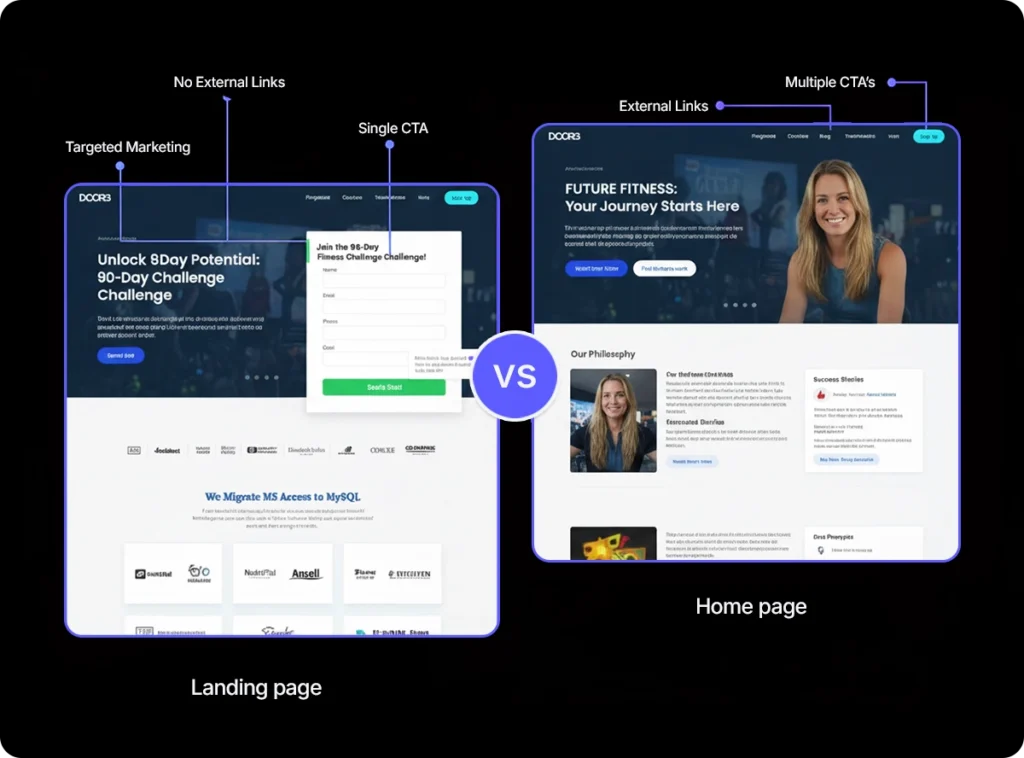
A homepage and a landing page serve different purposes within a digital ecosystem. A homepage is designed to provide an overview of the business, offering multiple navigation paths and general information. It acts as an entry point for various types of users.
A landing page, on the other hand, is highly focused and built for a single objective. It removes distractions and guides users toward one specific action, such as lead submission or purchase.
Understanding this difference is important because many businesses mistakenly use their homepage as a landing page, which often leads to lower conversion rates due to lack of focus.
Common Website Mistakes That Kill Conversions
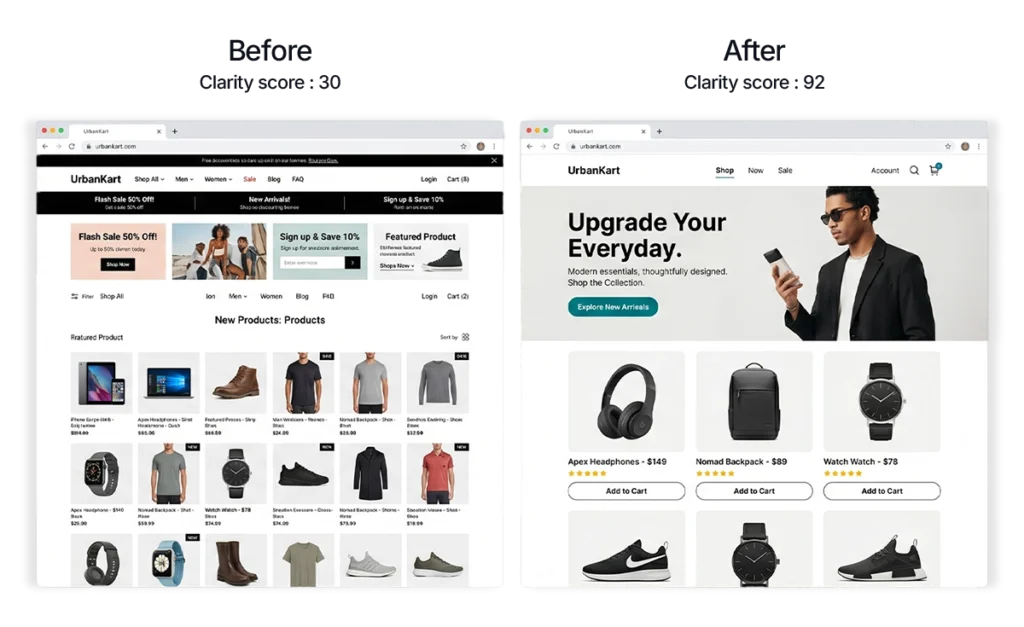
One of the most common mistakes is overloading the website with too much information. Instead of guiding users toward action, businesses often try to explain everything at once, which creates confusion and reduces engagement.
Another major issue is weak messaging hierarchy, where users cannot quickly understand what the business offers or why it is different. This leads to early drop-offs and lost opportunities.
Poor CTA placement is also a critical problem. If users are not clearly guided toward the next step, even interested visitors fail to convert, resulting in wasted traffic.
Anatomy of a High-Converting Page
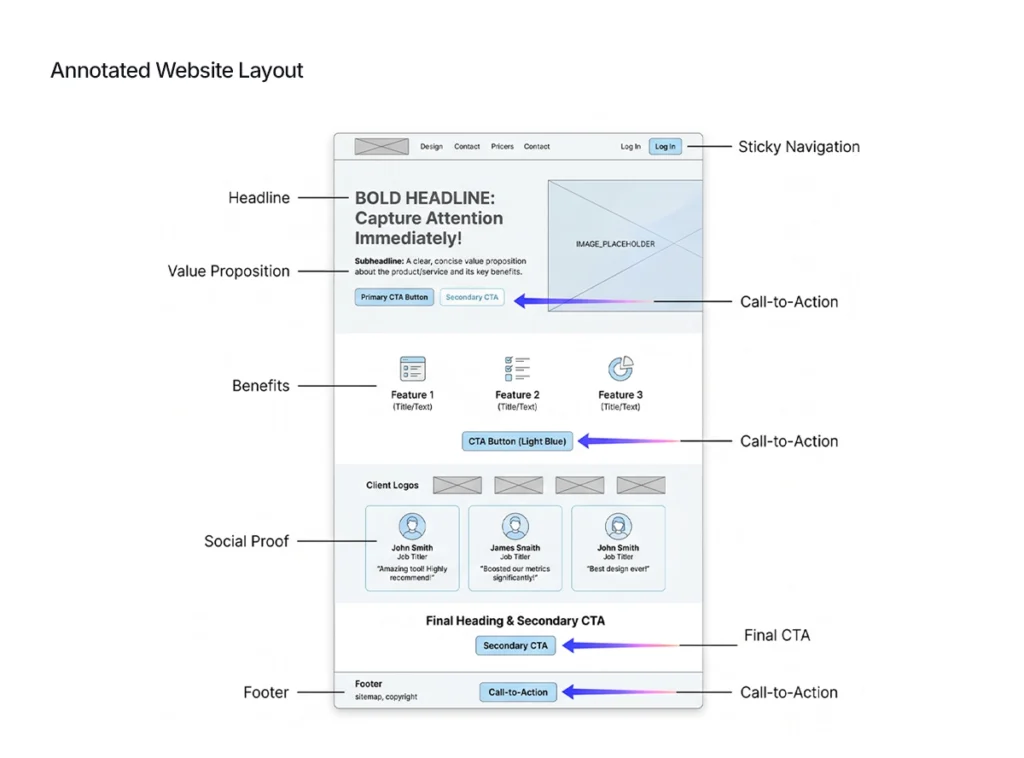
A high-converting page follows a structured flow that aligns with user psychology. It typically starts with a strong headline that communicates value instantly, followed by supporting content that reinforces the offer.
As users scroll, they encounter benefits, trust elements, and structured explanations that reduce hesitation. Finally, strategically placed calls-to-action guide users toward conversion without forcing or overwhelming them.
UX and Psychology Behind Conversions
User experience (UX) and psychology play a central role in website performance. Users do not read websites line by line; they scan for relevance, clarity, and trust within seconds.
Cognitive load is one of the most important psychological factors. When a website is too complex or cluttered, it increases mental effort, which reduces the likelihood of conversion. Simplicity, structure, and clarity reduce friction and improve decision-making speed.
Trust and familiarity also influence behavior. When users feel confident in a brand’s credibility and understand its value quickly, they are more likely to take action without hesitation.
Tools & Metrics to Measure Performance
Measuring website performance requires more than tracking traffic. Key metrics include conversion rate, bounce rate, session duration, and user flow analysis. These indicators help identify where users drop off and how effectively the website is guiding them toward action.
Tools such as analytics platforms, heatmaps, and session recordings provide deeper insights into user behavior. These insights help businesses refine layout, messaging, and structure to improve conversion performance over time.
Conclusion: Design for Conversion, Not Just Looks
A high-converting website is not defined by visual complexity or modern design trends, but by its ability to turn visitors into leads or customers. Many businesses focus heavily on aesthetics while ignoring structure, clarity, and user psychology, which ultimately limits performance.
When a website is designed with conversion intent at its core, every element serves a purpose. The result is not just a better-looking website, but a more effective business system that consistently turns traffic into measurable outcomes.
In modern digital marketing, design without conversion strategy is incomplete. The real goal is not just to attract visitors but to guide them into action.