SEO vs Ads: What Actually Brings Results
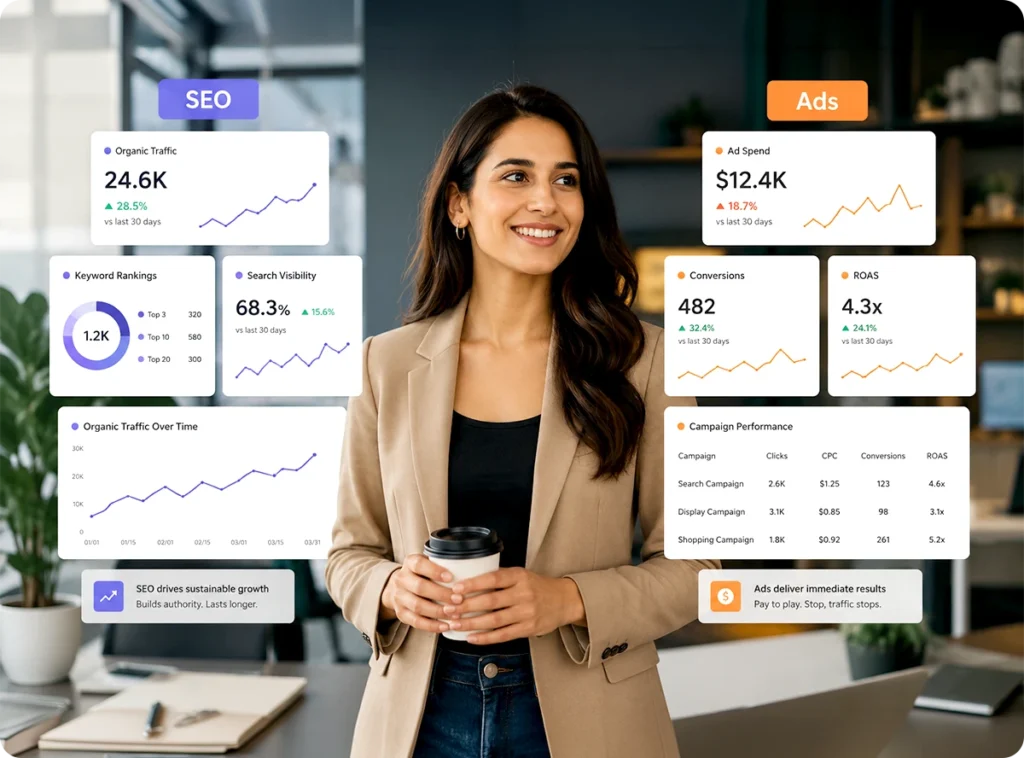
A practical breakdown of SEO vs ads and what actually brings results for businesses looking to improve visibility, lead generation, and long-term growth. This guide explains how SEO and paid advertising function differently, where each channel performs best, and why the strongest digital strategies combine both into one connected system.
Table of Contents
Introduction: The SEO vs Ads Debate
One of the most common questions businesses ask in digital marketing is whether SEO or paid advertising produces better results. Many business owners assume there is a single correct answer, but the reality is more complex.
SEO and paid ads are not identical marketing channels. They solve different problems, operate on different timelines, and support different stages of business growth. Some businesses expect instant results from SEO and become frustrated when rankings take time. Others rely entirely on paid advertising and struggle with rising costs and inconsistent lead quality over time.
Understanding SEO vs ads: what actually brings results requires looking beyond traffic numbers and focusing on how each system contributes to long-term business performance. The most effective strategy is usually not choosing one over the other, but understanding how both channels work together within a structured digital system.
What SEO Actually Does
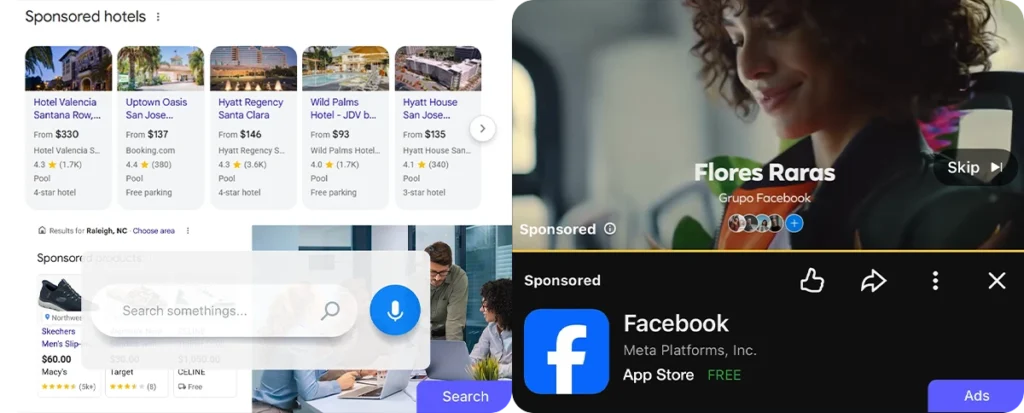
Search Engine Optimization (SEO) focuses on improving a website’s visibility in organic search results. The goal is to attract users who are actively searching for information, products, or services related to the business. SEO improves visibility through:
- Website optimization
- Content strategy
- Keyword targeting
- Technical SEO improvements
- Internal linking
- Authority building
Unlike advertising, SEO builds long-term digital equity. Over time, optimized content and website authority help generate organic traffic consistently without paying for every click. However, SEO requires patience, consistency, and strategic planning because rankings develop gradually rather than instantly.
Understanding SEO vs ads: what actually brings results starts with recognizing that SEO is designed for long-term visibility and sustainable traffic growth.
What Paid Ads Actually Do
Paid advertising focuses on generating immediate visibility through platforms such as Google Ads and social media advertising. Businesses pay to place advertisements in front of targeted audiences based on:
- Keywords
- User behavior
- Demographics
- Interests
- Search intent
The primary advantage of advertising is speed. Campaigns can begin generating traffic almost immediately after launch.
Paid ads are highly effective for:
- Immediate lead generation
- Product launches
- Promotional campaigns
- Fast traffic acquisition
- Audience testing
However, paid advertising depends heavily on budget allocation. Once campaigns stop running, visibility usually disappears immediately.
Understanding SEO vs ads: what actually brings results requires understanding that paid ads prioritize speed and control while SEO prioritizes long-term stability.
SEO vs Ads: What Actually Brings Results for Businesses
The answer depends on several important factors:
- Business stage
- Budget flexibility
- Industry competition
- Lead urgency
- Long-term growth goals
For example:
- A new business may benefit more from ads initially because immediate visibility is necessary.
- An established business may benefit more from SEO because long-term traffic sustainability becomes more important.
Businesses often struggle because they expect one channel to solve every problem independently.
In reality:
- SEO builds long-term discoverability
- Ads create immediate traffic
- Websites convert users
- Content builds trust
- Tracking improves optimization
Results improve significantly when these systems work together instead of separately.
Key Differences Between SEO and Ads
Although SEO and advertising both aim to generate visibility and leads, they operate very differently. The biggest differences involve:
- Speed
- Cost structure
- Sustainability
- Scalability
- User behavior
- Traffic stability
SEO focuses on building organic authority gradually, while ads focus on immediate exposure through paid placement.
Understanding these differences helps businesses invest more strategically instead of making decisions based purely on short-term expectations.
SEO vs Ads Comparison Table
| Factor | SEO | Paid Ads |
| Visibility Speed | Gradual growth over time | Immediate visibility |
| Cost Structure | Long-term investment | Continuous spending required |
| Traffic Sustainability | Long-lasting organic traffic | Stops when budget stops |
| User Intent | High search intent users | Targeted audience exposure |
| Scalability | Builds gradually | Scales faster with higher budget |
| Trust Level | Higher organic credibility | Lower trust compared to organic |
| Lead Generation Speed | Slower initially | Faster immediate leads |
| Long-Term ROI | Strong long-term efficiency | Strong short-term performance |
| Dependency | Depends on content and optimization | Depends heavily on ad spend |
| Best For | Sustainable growth | Fast visibility and testing |
When SEO Works Best
SEO performs best when businesses focus on long-term growth and sustainable visibility. SEO is highly effective for:
- Service-based businesses
- Local search visibility
- Authority building
- Educational content marketing
- Long-term lead generation
- Reducing dependency on paid traffic
Businesses that invest consistently in SEO often experience stronger organic traffic quality over time because users discover the business naturally through search intent.
SEO also helps improve:
- Brand credibility
- Search authority
- Content discoverability
- Website trust signals
However, SEO requires patience because rankings and authority do not develop instantly.
When Paid Ads Work Best
Paid advertising works best when businesses need immediate visibility and faster lead generation. Ads are especially effective for:
- New business launches
- Promotional campaigns
- Seasonal offers
- Lead generation campaigns
- Audience testing
- Competitive industries
Advertising also provides faster performance insights because businesses can quickly analyze:
- User behavior
- Click-through rates
- Conversion performance
- Audience engagement
However, campaigns require ongoing optimization because advertising costs can increase over time. Understanding SEO vs ads: what actually brings results means recognizing that ads perform best when speed and short-term visibility are priorities.
Why Businesses Often Choose the Wrong Strategy
Many businesses make the mistake of treating SEO and advertising as competitors instead of complementary systems. Some businesses:
- Ignore SEO completely and rely only on ads
- Expect SEO to produce instant leads
- Run ads without proper landing pages
- Generate traffic without conversion systems
This creates unstable digital performance because visibility alone does not guarantee business growth. The real issue is usually not SEO or ads individually. The issue is lack of strategic alignment between:
- Traffic generation
- User experience
- Conversion systems
- Tracking
- Messaging
The Real Problem: Lack of System Alignment
Businesses often assume poor performance is caused by the marketing channel itself when the real problem exists elsewhere.
For example:
- Ads may generate traffic to weak landing pages
- SEO may rank pages with poor conversion structure
- Websites may fail to guide users toward action
- Content may attract traffic without supporting inquiries
Without alignment, even strong traffic sources fail to produce consistent business outcomes. Understanding SEO vs ads: what actually brings results helps businesses realize that performance depends on the complete digital system rather than isolated channels.
Why Combining SEO and Ads Creates Better Results
The strongest digital strategies combine SEO and advertising into one structured ecosystem. This creates a more balanced and scalable digital growth system.
SEO helps:
- Build authority
- Improve discoverability
- Reduce long-term acquisition costs
Ads help:
- Generate immediate traffic
- Test offers quickly
- Support faster lead generation
When both systems work together:
- Ads provide short-term performance
- SEO provides long-term sustainability
- Content improves trust
- Websites improve conversions
- Tracking improves optimization
Long-Term Benefits of SEO
Businesses investing in SEO often experience:
- Sustainable organic traffic
- Improved search visibility
- Better authority
- Lower long-term acquisition costs
- Consistent lead generation
Over time, SEO becomes more efficient because optimized content continues attracting traffic without requiring direct payment for every visitor.
Long-Term Benefits of Paid Advertising
Businesses using paid advertising strategically often experience:
- Faster lead generation
- Better audience targeting
- Immediate campaign visibility
- Faster testing opportunities
- Better short-term scalability
Advertising also helps businesses collect valuable performance data that can improve broader marketing strategies.
Conclusion: Results Depend on Strategy, Not Channels
Understanding SEO vs ads: what actually brings results helps businesses move beyond the misconception that one channel is universally better than the other.
SEO and paid advertising solve different problems and support different stages of business growth. SEO builds long-term visibility and authority, while ads provide immediate traffic and faster lead generation. The strongest results usually happen when both systems work together within a connected digital strategy.
The goal is not simply to choose between SEO or ads. The goal is to build a digital system where traffic, content, websites, conversion pathways, and optimization processes all support measurable business growth consistently over time.