What’s Missing From Your Website Setup
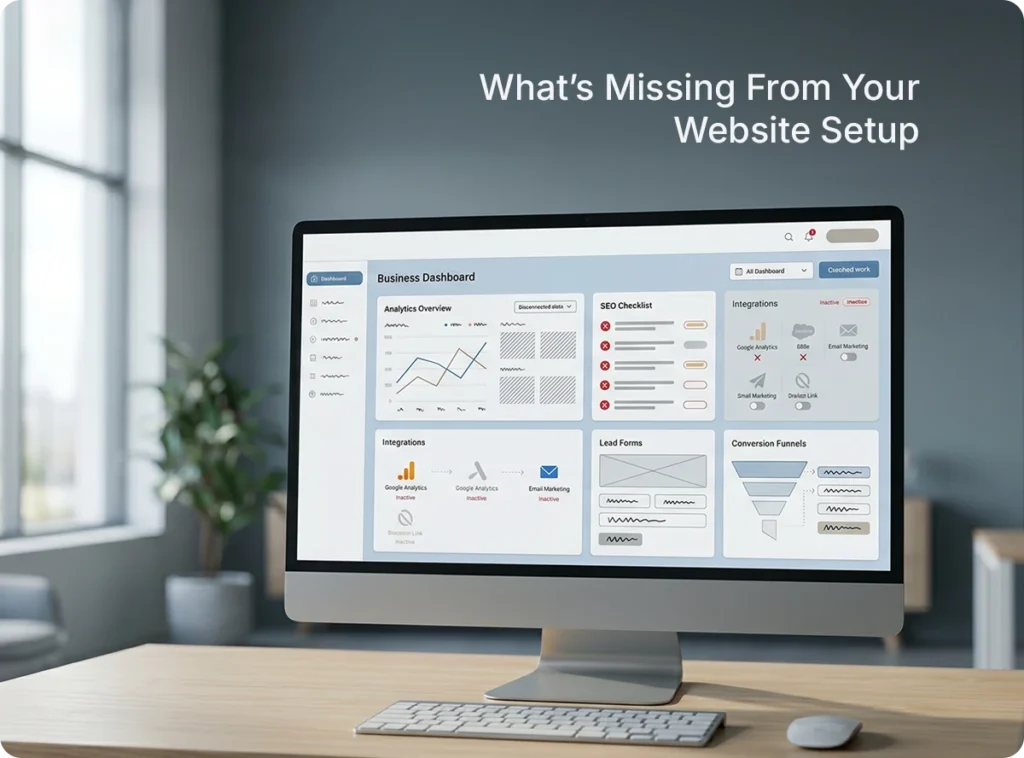
A practical breakdown of what’s missing from your website setup and why many business websites fail to support SEO, lead generation, and digital growth effectively. This guide explains the hidden components most businesses overlook and how a complete website setup creates a stronger foundation for traffic, trust, and conversions.
Table of Contents
Introduction: Why Most Websites Feel Incomplete
Many business websites look visually finished but still feel ineffective after launch. The pages are designed, the branding is added, and the website is technically live, yet the business continues struggling with visibility, inquiries, and customer engagement. This happens because launching a website is not the same as building a complete website setup.
A website can appear modern on the surface while still missing the systems required to support real business growth. In many cases, businesses focus heavily on visuals while ignoring the infrastructure needed for SEO, conversions, user experience, and performance tracking. Understanding what’s missing from your website setup is important because small missing elements often create major performance problems over time.
What a Website Setup Really Includes
A complete website setup is not limited to design and development. It includes every component required to help users discover the business, understand the offer, trust the brand, and take action.
A strong website setup usually combines:
- SEO structure
- User experience optimization
- Conversion pathways
- Mobile responsiveness
- Content systems
- Trust elements
- Technical performance
- Analytics and tracking
- Lead generation systems
When these elements are connected properly, the website becomes a functional business asset instead of just an online presence.
The Hidden Gap Between Launching and Performing
One of the biggest misconceptions in digital marketing is assuming that a launched website is automatically ready to perform. In reality, many websites are incomplete beneath the surface.
Businesses often realize this only after asking questions like:
- Why is the website not generating leads?
- Why is traffic low?
- Why are visitors leaving quickly?
- Why are Google rankings weak?
- Why are ads not converting?
These problems usually happen because critical systems are missing from the website setup. A website without structure may look professional visually but still fail operationally.
What’s Missing From Your Website Setup?
There are several important components commonly missing from business websites.
Clear User Direction
One of the most overlooked website problems is lack of direction. Many websites provide information but fail to guide users clearly toward action. Visitors often land on the homepage and feel unsure about:
- What to do next
- Which service is relevant
- Where to click
- How to contact the business
Strong website setups reduce confusion by creating clear user flow. This includes:
- Clear CTA buttons
- Structured page hierarchy
- Logical navigation
- Simplified layouts
Users should never feel lost while browsing a website.
Search Visibility Structure
SEO is one of the most important systems missing from many websites. Without proper SEO structure, search engines struggle to understand the website content and rank it effectively. Important SEO setup elements include:
- Keyword optimization
- SEO-friendly headings
- Metadata optimization
- Internal linking
- Schema structure
- Technical SEO
- Image optimization
- Crawlable page structure
A website without SEO structure becomes difficult to discover through Google search.
Trust & Credibility Elements
Users rarely contact businesses they do not trust. Many websites fail because they do not provide enough credibility signals to reduce hesitation. Important trust-building elements include:
- Testimonials
- Customer reviews
- Real project examples
- Case studies
- Business certifications
- Portfolio sections
- Client logos
Trust signals improve both conversion rates and user confidence.
Conversion Pathways
Another major issue is the absence of conversion-focused structure. Many websites assume visitors will figure out how to contact the business independently. In reality, websites need clear conversion pathways. Effective conversion systems include:
- Contact forms
- Booking systems
- Inquiry sections
- Sticky CTA buttons
- WhatsApp integration
- Service landing pages
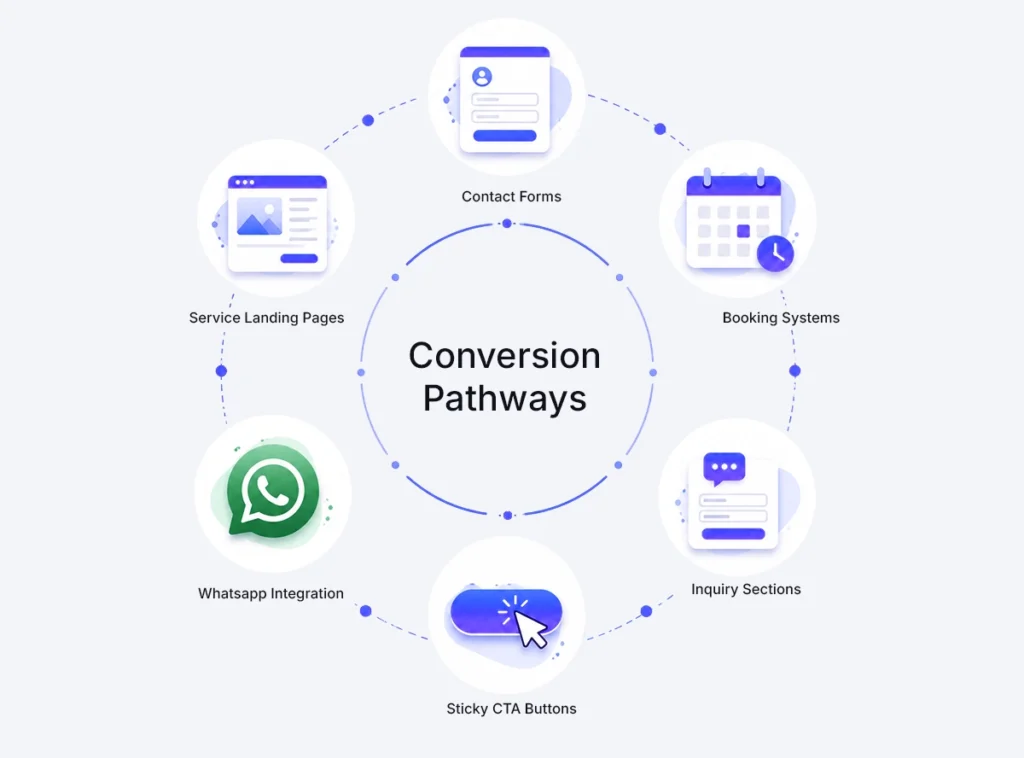
Without conversion pathways, traffic leaves without becoming leads.
Visitor Tracking Systems
Many businesses have no visibility into how users behave on their website. Without analytics and tracking systems, businesses cannot identify:
- Where visitors come from
- Which pages perform best
- Where users leave
- Which campaigns generate leads
- Which services attract interest
Important website tracking tools include:
- Google Analytics
- Google Search Console
- Heatmaps
- Conversion tracking
- User session recordings
Tracking systems help businesses improve websites using real data instead of assumptions.
Mobile-First Experience
Most website traffic now comes from mobile devices, yet many websites are still designed primarily for desktop viewing. This creates problems such as:
- Difficult mobile navigation
- Broken layouts
- Small unreadable text
- Slow performance
- Poor user interaction
A mobile-first website setup improves both SEO performance and user engagement.
Content Depth
Many business websites contain very little useful content. Thin content reduces:
- SEO visibility
- Search rankings
- Authority
- User trust
- Organic traffic potential
A strong content setup includes:
- SEO-focused blog posts
- Detailed service pages
- Educational content
- FAQ sections
- Industry insights
Content helps websites build long-term search visibility and authority.
Performance Optimization
Website performance directly affects user experience and conversions. Slow-loading websites increase bounce rates because users expect speed and smooth interaction. Common performance issues include:
- Heavy image files
- Poor hosting
- Excessive scripts
- Large animations
- Unoptimized assets
Website speed optimization improves SEO, usability, and lead generation performance.
Why Most Websites Become “Online Brochures”
Many websites fail because they are built only to display information. They describe the business but do not actively support:
- SEO growth
- Lead generation
- Conversion optimization
- Customer acquisition
- User engagement
As a result, the website exists online but contributes very little to actual business growth. This is why businesses often feel disappointed after launching a website. The issue is not always the design quality, it is the missing infrastructure behind the design.
The Difference Between Active and Passive Websites
| Passive Website | Active Website |
| Simply exists online | Continuously supports business growth |
| Acts like a digital brochure | Functions as a lead generation system |
| Limited traffic strategy | Uses SEO, ads, and content to attract visitors |
| Generic or unclear messaging | Clear messaging focused on customer needs |
| Few or weak CTAs | Strong CTAs that drive action and conversions |
| Little trust-building content | Uses testimonials, proof, and authority signals |
| Visitors leave without engagement | Converts visitors into leads or customers |
| Focused mainly on design | Focused on measurable business results |
Businesses with complete website systems consistently perform better because every part of the website supports a measurable business objective.
How a Complete Website Setup Supports Business Growth
A complete website setup creates a structured growth system. When all systems work together, websites become significantly more effective.
SEO Improves Visibility | Content Builds Authority | Conversion Systems Capture Leads | Analytics Improve Decision-Making
Website Setup Checklist for Better Results
Missing even a few of these elements can reduce overall website performance. Businesses should regularly review whether their website setup includes:
- SEO optimization
- Mobile responsiveness
- Fast loading speed
- Conversion-focused layout
- Lead forms
- Landing pages
- Analytics tracking
- Internal linking
- Trust signals
- Content strategy
- Clear CTA sections
- User-friendly navigation
Common Website Setup Myths
“A Good Design Is Enough”
Visual design alone does not generate leads or improve SEO rankings.
“Traffic Automatically Creates Sales”
Traffic without conversion structure rarely produces strong business outcomes.
“Websites Only Need Updates Occasionally”
Modern websites require continuous optimization, content updates, and performance improvements.
“SEO Happens Automatically”
SEO requires intentional strategy, optimization, and content structure.
Understanding these misconceptions helps businesses build more effective digital systems.
Conclusion: Your Website Needs More Than Design
Many businesses struggle online not because they lack effort, but because important systems are missing from their website setup. A successful website is not defined only by appearance. It is defined by how effectively it supports visibility, trust, conversions, and business growth.
When SEO, content, analytics, user experience, and conversion systems work together, the website becomes a powerful digital asset instead of just a visual presence. The goal is not simply to launch a website. The goal is to build a complete website setup that consistently supports real business outcomes over time.