The Flow Behind Effective Advertising
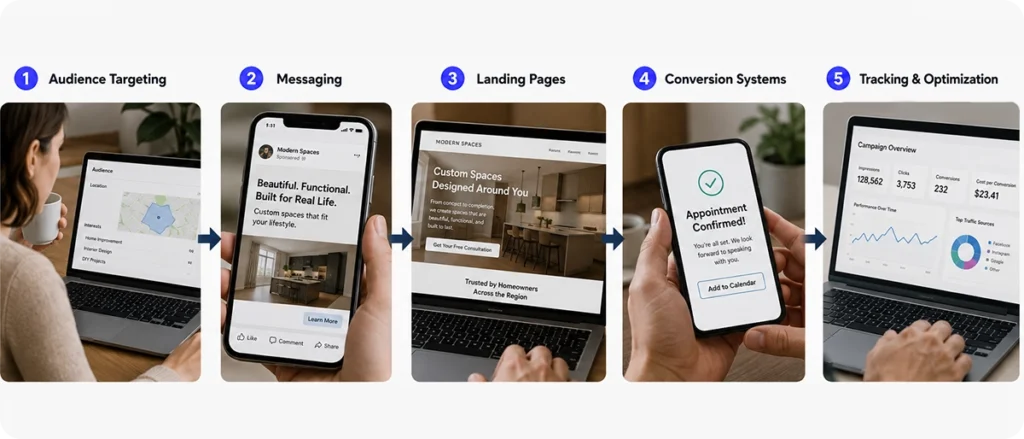
A practical breakdown of the flow behind effective advertising and why successful campaigns depend on connected systems rather than isolated ad creatives. This guide explains how audience targeting, messaging, landing pages, conversion systems, and tracking work together to create more predictable advertising performance and stronger lead generation.
Table of Contents
Introduction: Why Most Advertising Feels Inconsistent
Many businesses invest in advertising expecting immediate and predictable results, yet often experience inconsistent lead flow despite running active campaigns. Some advertisements generate traffic but fail to convert users into inquiries, while others attract engagement without producing measurable business outcomes.
This usually happens because advertising is treated as a single activity rather than a connected process. Effective advertising is not created by ads alone. It is built through a structured flow where every stage supports the next stage in the customer journey. If one part of the process becomes weak or disconnected, overall campaign performance becomes unstable.
Understanding the flow behind effective advertising helps businesses identify where campaigns break down and why visibility alone is not enough to generate sustainable growth.
What “The Flow Behind Effective Advertising” Actually Means
When we explain the flow behind effective advertising, we are referring to the complete journey users experience from the moment they see an advertisement to the moment they convert into a lead or customer. This process typically includes:
- Audience targeting
- Messaging strategy
- Ad creatives
- Landing pages
- Conversion systems
- Tracking and analytics
- Optimization processes
The purpose of this flow is to reduce friction throughout the customer journey and guide users toward a clear action in a structured way. Instead of relying only on visibility or clicks, effective advertising focuses on how every stage contributes to conversion performance.
Why Advertising Is More Than Just Running Ads
One of the biggest misconceptions in digital marketing is believing that advertising success depends only on launching campaigns. In reality, advertisements are only one part of a larger system. A strong campaign may still fail if:
- The targeting attracts the wrong audience
- The landing page creates confusion
- The messaging lacks clarity
- The website loads slowly
- Conversion pathways are weak
- Tracking systems are incomplete
This is why businesses often become frustrated after increasing budgets without seeing better results. Advertising performance depends more on system alignment than on spending alone.
Understanding the flow behind effective advertising helps businesses focus on the complete conversion journey rather than isolated campaign metrics.
The Flow Behind Effective Advertising Step by Step
Successful advertising follows a structured process where each stage supports user movement toward conversion. When these stages are connected properly, campaigns become more stable, measurable, and scalable.
The Flow Behind Effective Advertising Starts With Audience Research & Intent
Every effective campaign begins with understanding the target audience clearly. Advertising becomes inefficient when businesses attempt to reach everyone instead of focusing on users with relevant intent. Audience research helps identify:
- User problems
- Search behavior
- Buying intent
- Customer expectations
- Decision-making patterns
This stage is important because the quality of traffic directly affects conversion quality. High-performing campaigns attract users who are already searching for solutions rather than relying entirely on broad exposure. A strong understanding of audience intent improves targeting accuracy and overall campaign performance.
The Flow Behind Effective Advertising Depends on Messaging & Offer Positioning
After identifying the audience, the next stage involves developing messaging that communicates value clearly and quickly. Users make decisions within seconds, which means advertising messages must immediately explain:
- What the business offers
- Who the service is for
- Why the offer matters
- What action users should take next
Weak messaging creates hesitation and reduces engagement even when targeting is accurate. Effective advertising focuses on clarity rather than complexity. A strong value proposition helps users connect the advertisement with their needs more easily.
The Flow Behind Effective Advertising Uses Ad Creative to Capture Attention
Ad creatives play an important role in attracting attention, but they are most effective when supported by strong strategy and messaging. Successful ad creatives usually focus on:
- Clear communication
- Visual hierarchy
- Simplicity
- Relevance
- Strong CTA placement
Instead of overwhelming users with excessive information, effective creatives guide attention toward one primary objective. However, ad creatives alone do not determine campaign success. They simply move users into the next stage of the advertising flow.
The Flow Behind Effective Advertising Relies on Landing Page Experience
The landing page is one of the most important parts of the advertising system because it directly affects conversion behavior after the click. Many businesses lose leads at this stage because the landing page:
- Does not match the advertisement
- Lacks clear structure
- Loads slowly
- Creates confusion
- Provides weak trust signals
A strong landing page continues the conversation started by the advertisement. It reinforces user trust, explains the value clearly, and guides visitors toward a specific action. Landing pages should reduce friction rather than increase cognitive overload.
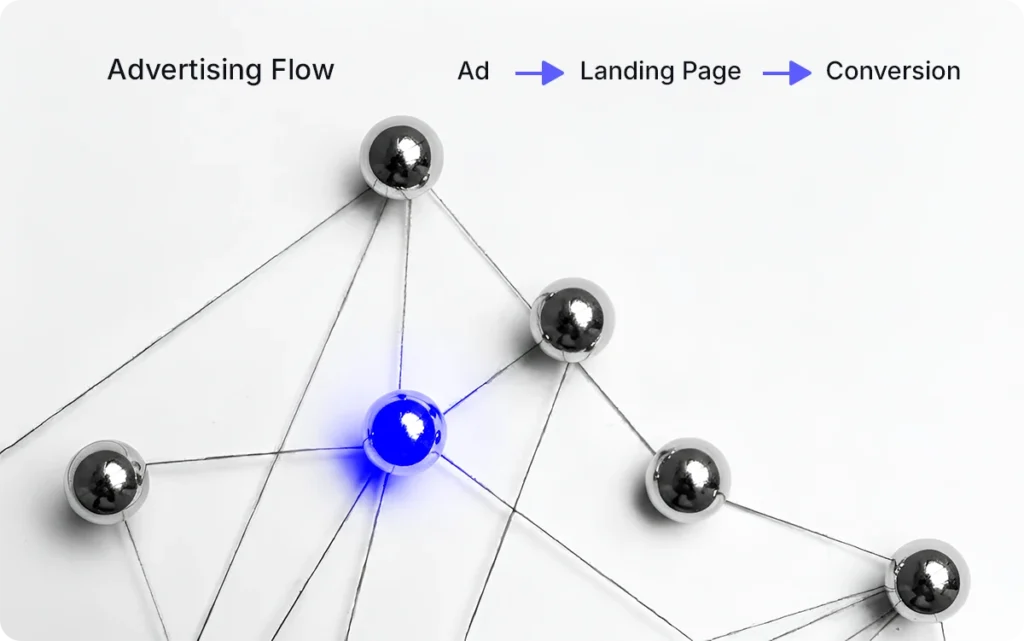
The Flow Behind Effective Advertising Requires Strong Conversion Pathways
Traffic alone does not create business growth. Users need a clear and structured pathway toward conversion. Conversion-focused systems usually include:
- Inquiry forms
- Booking sections
- CTA buttons
- WhatsApp integration
- Service landing pages
- Trust-building elements
Without these systems, users may leave the website even if they are interested in the service. This is one of the biggest reasons businesses struggle with inconsistent lead generation despite generating traffic successfully.
The Flow Behind Effective Advertising Improves Through Tracking & Optimization
Tracking systems provide visibility into how users interact with campaigns and websites. Without analytics, optimization becomes highly limited because businesses cannot accurately identify where performance issues exist. A structured advertising system tracks:
- Conversion rates
- User engagement
- Landing page performance
- Audience behavior
- Lead quality
- Traffic sources
This data helps improve campaigns continuously over time. Instead of making random changes, optimization decisions are based on measurable user behavior and conversion insights.
Why Funnels Matter in Advertising
Advertising funnels help organize the customer journey into structured stages. Instead of expecting immediate conversions from every interaction, funnels guide users gradually from awareness to action. A simplified advertising funnel often includes:
- Awareness
- Interest
- Consideration
- Conversion
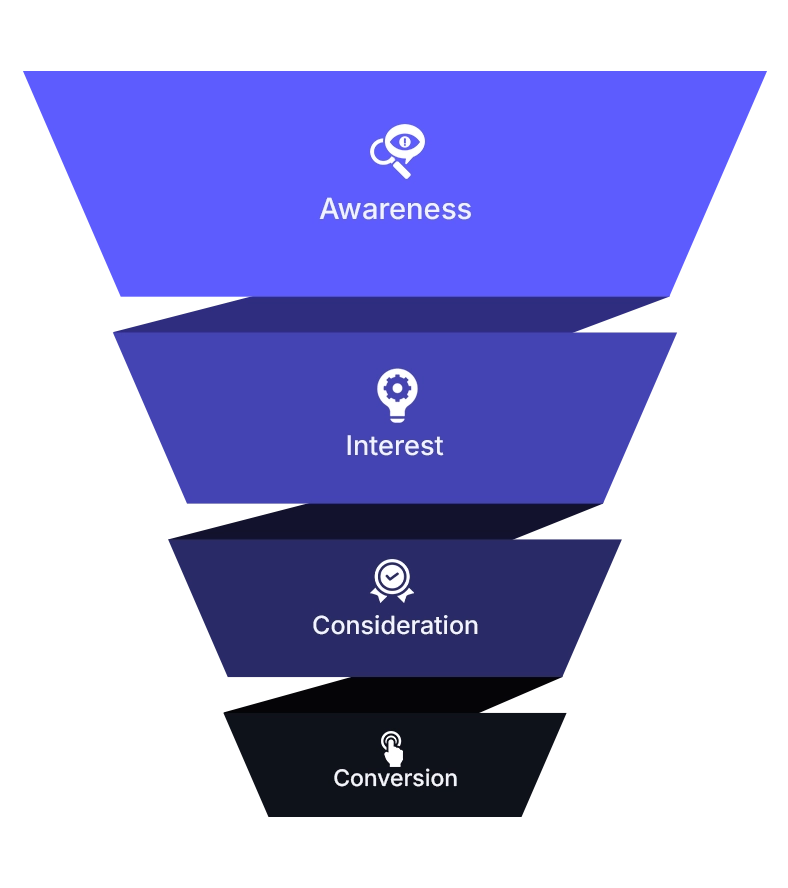
Each stage requires different messaging, content, and user experience. Understanding the flow behind effective advertising helps businesses build campaigns that support the full decision-making process rather than focusing only on immediate clicks.
The Connection Between Ads, Websites, and User Experience
Advertising performance is heavily influenced by website structure and user experience. Even highly targeted campaigns struggle when users encounter confusing layouts, slow pages, or weak navigation. A strong user experience improves:
- Engagement
- Trust
- Conversion rates
- Lead quality
- User retention
This is why advertising systems should always be connected with website optimization and conversion-focused design. Businesses that separate advertising from website strategy often experience unstable performance and poor ROI.
Common Breakdowns in Advertising Flow
Many advertising systems fail because one or more stages of the flow become disconnected. Common problems include:
- Broad audience targeting
- Weak messaging
- Poor landing page alignment
- Missing conversion pathways
- Incomplete tracking systems
- Slow-loading websites
- Generic CTAs
- Lack of optimization
These issues create friction throughout the customer journey and reduce campaign effectiveness significantly.
Why Effective Advertising Requires System Thinking
Effective advertising works best when campaigns are viewed as interconnected systems rather than isolated marketing activities. A structured advertising system creates alignment between:
- User intent
- Messaging
- Design
- Conversion flow
- Tracking
- Optimization
This alignment improves consistency because every stage supports the same business objective. Understanding the flow behind effective advertising helps businesses move away from reactive marketing and toward more strategic decision-making.
Long-Term Benefits of Structured Advertising Flow
Businesses that build structured advertising systems often experience stronger long-term performance because campaigns become easier to optimize and scale. Long-term benefits usually include:
- Better lead quality
- Improved conversion rates
- More efficient ad spending
- Stronger campaign consistency
- Better tracking visibility
- Improved ROI
Over time, optimization becomes more effective because every part of the advertising process is measurable and connected.
Conclusion: Advertising Works Best When Every Step Connects
Understanding the flow behind effective advertising helps businesses see why successful campaigns depend on more than visibility alone. Effective advertising is created through connected systems where targeting, messaging, landing pages, conversion pathways, and tracking all work together to support user movement toward action.
When these systems are aligned properly, campaigns become significantly more stable, measurable, and scalable. The goal is not simply to generate clicks or impressions. The goal is to create an advertising flow where every stage contributes to consistent lead generation and long-term business growth.