What Makes Our Approach Different

A practical breakdown of what makes our approach different and why connected digital systems consistently outperform isolated marketing activities. This guide explains how strategy, websites, SEO, content, advertising, tracking, and conversion systems work together to create stronger digital performance and more sustainable business growth.
Table of Contents
Introduction: Why Most Digital Marketing Feels Disconnected
Many businesses invest heavily in digital marketing but still struggle with inconsistent results. They may run advertisements, improve their social media activity, publish content regularly, or redesign their website, yet lead generation remains unstable. This usually happens because marketing activities are managed separately instead of being connected strategically.
In many cases:
- Ads generate traffic without conversions
- Websites attract visitors without inquiries
- Content increases visibility without supporting business goals
- SEO efforts improve rankings without improving lead quality
These issues are rarely caused by a lack of effort. They are usually caused by a lack of alignment. Understanding what makes our approach different begins with recognizing that digital growth depends on systems, not isolated activities.
What Makes Our Approach Different
What makes our approach different is that we do not treat websites, SEO, advertising, content, and tracking as separate services. We build connected digital systems where every component supports the same business objective. Instead of focusing only on traffic, impressions, or visual design, we focus on:
- User behavior
- Conversion flow
- Lead quality
- Funnel structure
- Long-term scalability
- Performance optimization
This creates a more structured digital ecosystem where visibility and conversions work together rather than independently. Our approach prioritizes clarity, alignment, and measurable outcomes instead of disconnected marketing activity.
Why We Focus on Systems Instead of Isolated Marketing
One of the biggest problems in digital marketing is fragmentation. Many businesses work with separate vendors or strategies for:
- Website development
- SEO
- Paid advertising
- Social media
- Content creation
While each service may perform individually, the overall customer journey often becomes disconnected. For example:
- Ads may promise one thing while landing pages communicate something else
- SEO may generate traffic to pages with weak conversion structures
- Content may increase engagement without supporting lead generation
What makes our approach different is that every system is planned together rather than independently. This improves:
- User experience
- Messaging consistency
- Conversion performance
- Marketing efficiency
What Makes Our Approach Different From Traditional Agencies
Traditional marketing approaches often focus heavily on deliverables rather than business outcomes. Many agencies prioritize:
- Posting frequency
- Traffic numbers
- Impression metrics
- Generic reports
However, these metrics alone do not guarantee growth. What makes our approach different is that we focus on the full business impact of digital systems rather than isolated vanity metrics.
Instead of asking:
“How much traffic did the website receive?”
We focus on:
- How users behave
- Why users convert or leave
- Which channels generate quality leads
- Where friction exists in the funnel
- How systems can improve continuously
“This creates a more performance-focused and strategic process.“
How Our Process Creates Better Digital Performance
Strong digital performance comes from strategic alignment across multiple stages of the customer journey.
What Makes Our Approach Different Starts With Strategy Before Execution
Before launching campaigns or redesigning websites, we first analyze:
- Business goals
- Target audience
- User intent
- Competitor positioning
- Conversion opportunities
A clear strategy helps align:
- Messaging
- User experience
- Traffic channels
- Conversion systems
- Long-term growth objectives
What Makes Our Approach Different Through Conversion-Focused Website Structure
Websites should function as conversion systems rather than static digital brochures. This improves the ability of the website to turn traffic into measurable inquiries and leads.
Many websites fail because they prioritize appearance while ignoring:
- User flow
- CTA placement
- Conversion psychology
- Funnel structure
- Mobile experience
Our website strategy focuses on:
- Clear navigation
- Strong messaging hierarchy
- User-friendly structure
- Landing page optimization
- Conversion pathways
What Makes Our Approach Different in SEO With Long-Term Intent
SEO should support business growth, not just keyword rankings. This creates stronger organic traffic quality and more meaningful engagement.
Many SEO strategies focus only on visibility metrics without considering:
- Search intent
- User relevance
- Conversion potential
- Content quality
Our SEO process focuses on building:
- Sustainable visibility
- Topical authority
- Search relevance
- Long-term traffic growth
Content is planned strategically around:
- User problems
- Business services
- Search behavior
- Funnel stages
What Makes Our Approach Different in Advertising With Funnel Alignment
Advertising performs best when campaigns are connected to the larger digital system. This creates stronger lead quality and more efficient advertising performance.
Many businesses experience poor ROI because:
- Ads target broad audiences
- Landing pages lack alignment
- Conversion systems are weak
- Tracking is incomplete
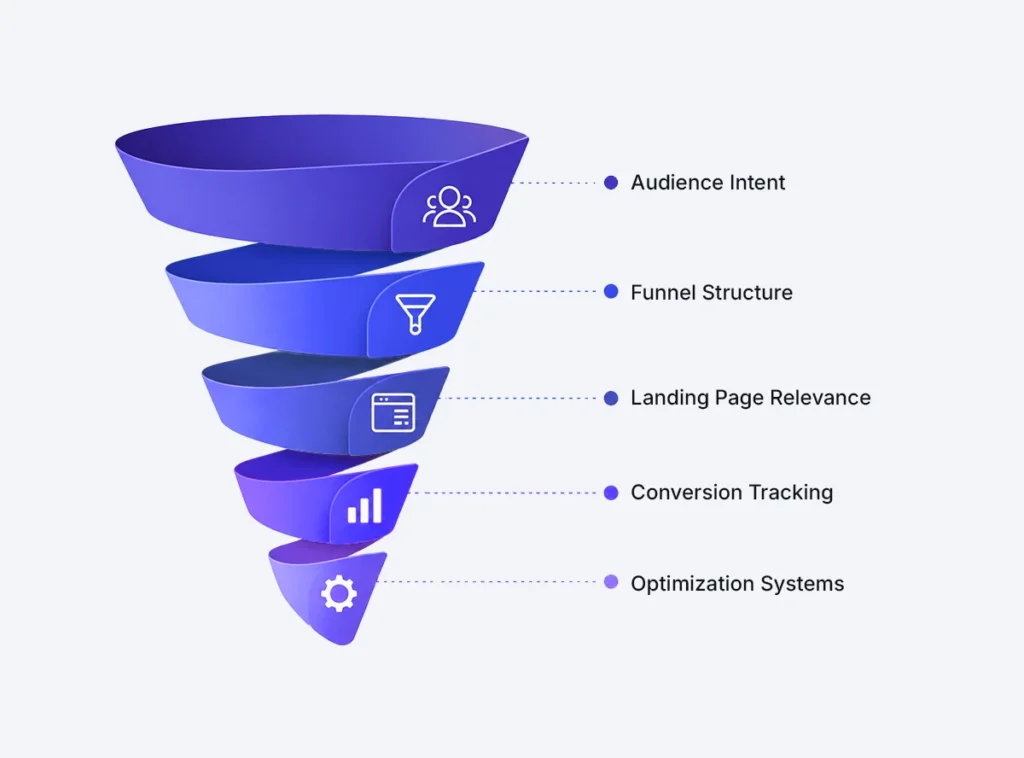
Our advertising strategy focuses on:
- Audience intent
- Funnel structure
- Landing page relevance
- Conversion tracking
- Optimization systems
What Makes Our Approach Different Through Content That Supports Business Goals
Content should support more than visibility or social activity. This helps businesses improve trust, engagement, and long-term discoverability simultaneously.
Many businesses publish random content without connecting it to:
- SEO goals
- Conversion strategy
- User education
- Funnel positioning
Our content strategy focuses on creating:
- Search-focused articles
- Educational content
- Conversion-supporting messaging
- Authority-building topics
What Makes Our Approach Different With Tracking & Performance Optimization
Data visibility is essential for sustainable growth. This allows digital performance to improve consistently over time using measurable insights rather than assumptions.
Without proper tracking systems, businesses cannot accurately identify:
- Which campaigns generate leads
- Where users drop off
- Which pages underperform
- Which traffic sources convert best
Our process includes:
- Conversion tracking
- Analytics integration
- Funnel monitoring
- User behavior analysis
- Continuous optimization
Why User Experience Matters in Our Approach
User experience directly affects how people interact with a business online. Confusing websites, weak navigation, inconsistent messaging, and slow-loading pages create friction that reduces conversions. A better user experience improves trust and helps users move through the conversion process more naturally.
Our approach prioritizes:
- Clarity
- Simplicity
- Mobile responsiveness
- Readability
- Structured user journeys
The Problem With Random Marketing
Random marketing creates instability because activities are performed without strategic connection. This often leads to:
- Inconsistent branding
- Weak conversion pathways
- Poor campaign efficiency
- Low-quality traffic
- Unstable lead generation
Businesses may appear active online while still struggling with measurable growth. What makes our approach different is that every marketing activity supports a structured objective within the larger digital system.
How We Build Connected Digital Systems
Our process focuses on building digital ecosystems where:
- Websites support conversions
- SEO supports discoverability
- Ads support lead generation
- Content supports authority
- Tracking supports optimization
Each component strengthens the others rather than operating independently. This interconnected structure creates stronger scalability and more stable long-term performance.
Long-Term Benefits of Our Approach
Optimization becomes easier because every digital component is connected strategically. Businesses that adopt structured digital systems often experience:
- Better lead consistency
- Higher conversion rates
- Improved SEO visibility
- More efficient advertising
- Stronger customer trust
- Better ROI
- More measurable growth
Conclusion: Real Growth Requires Strategic Alignment
Understanding what makes our approach different helps businesses recognize why disconnected marketing activities often fail to create sustainable growth.Successful digital performance is not built through isolated campaigns or short-term tactics. It is built through systems where websites, SEO, advertising, content, tracking, and conversion strategies all work together toward measurable business goals.
When these systems are aligned properly, businesses create stronger visibility, better lead generation, and more scalable long-term growth.The goal is not simply to increase online activity. The goal is to create a digital system where every component contributes to meaningful business outcomes consistently over time.