How We Run Ads With Proper Tracking
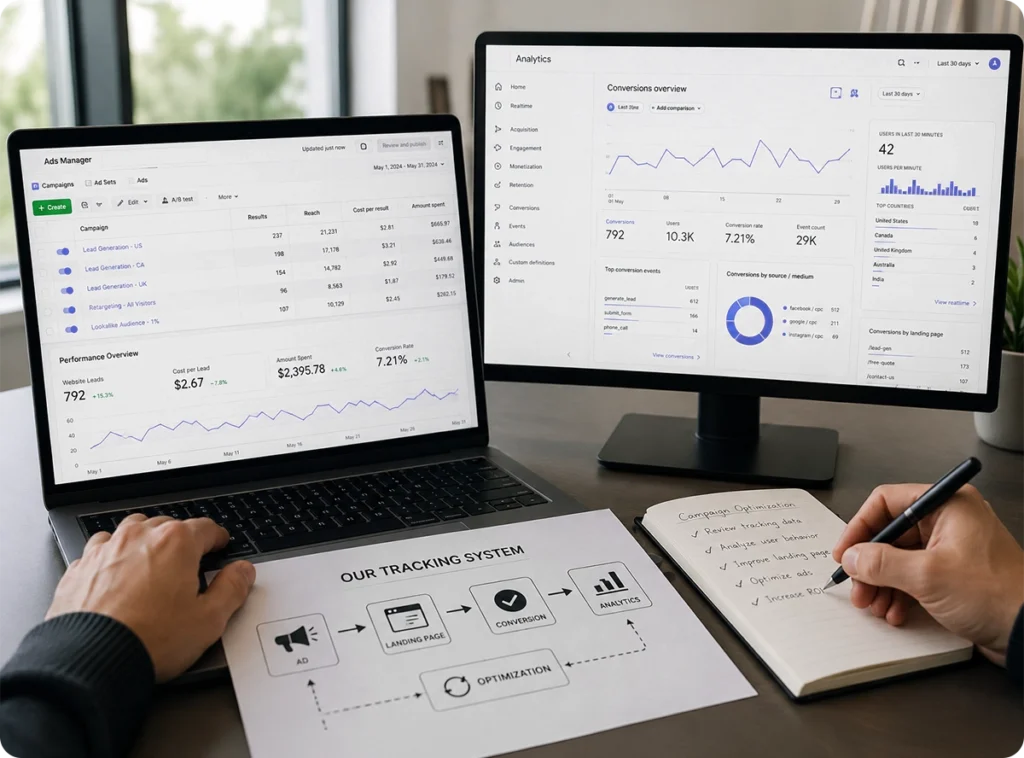
A practical breakdown of how we run ads with proper tracking and why tracking systems are one of the most important parts of successful digital advertising. This guide explains how conversion tracking, analytics, landing pages, and optimization systems work together to improve campaign performance, lead quality, and long-term advertising ROI.
Table of Contents
Introduction: Why Most Ad Campaigns Fail Without Tracking
Many businesses launch Google Ads or social media advertising campaigns expecting immediate results, yet struggle to understand why lead quality remains inconsistent even when traffic increases. The campaigns may generate impressions, clicks, and website visits, but without proper visibility into user behavior, businesses cannot accurately measure what is actually working.
This is one of the biggest problems in modern digital advertising. Companies often focus heavily on traffic metrics while overlooking the systems required to track conversions, measure engagement, and identify which campaigns contribute to real business growth.
Understanding how we run ads with proper tracking changes the entire approach to advertising. Instead of relying on assumptions or surface-level metrics, every campaign decision is supported by measurable performance data. This creates a more reliable system where optimization is based on user behavior rather than guesswork.
What “How We Run Ads With Proper Tracking” Actually Means
When we talk about how we run ads with proper tracking, we are referring to a structured advertising process where every important interaction is measured throughout the customer journey. The goal is not simply to generate traffic but to understand how users behave after clicking an ad and whether those interactions lead to meaningful business outcomes.
A properly tracked campaign measures actions such as form submissions, calls, inquiries, landing page engagement, and conversion rates. This provides a clear understanding of which campaigns generate qualified leads and which areas of the funnel require improvement.
Without this level of tracking, businesses often continue investing in campaigns without understanding where performance issues actually exist. Proper tracking creates clarity, which is essential for long-term optimization and scalability.
Why Tracking Matters More Than Clicks
One of the most common misconceptions in paid advertising is assuming that clicks automatically indicate success. While clicks show that users interacted with an advertisement, they do not reveal whether those users converted into leads or customers.
This distinction is extremely important when evaluating advertising performance. A campaign may produce high traffic volume while still generating weak business outcomes because the landing page experience, audience targeting, or conversion process is ineffective.
Understanding how we run ads with proper tracking helps solve this issue because tracking reveals what happens after the click. It identifies where users drop off, which pages perform well, and which campaigns generate the highest-quality leads.
Successful advertising is not measured by visibility alone. It is measured by how effectively traffic converts into measurable business results.
How We Run Ads With Proper Tracking From Day One
One of the key reasons advertising campaigns become more reliable over time is because tracking systems are implemented before scaling budgets or optimizing campaigns. We do not treat tracking as an optional addition after launch. Instead, it is integrated into the advertising structure from the beginning.
The first step involves defining clear conversion goals based on the business objective. Depending on the business model, conversions may include form submissions, consultation bookings, WhatsApp inquiries, phone calls, or purchases. Establishing these goals early ensures that campaign optimization is aligned with actual business outcomes rather than vanity metrics.
Once conversion goals are defined, proper tracking systems are configured to collect accurate performance data. This usually includes Google Analytics, Google Tag Manager, Google Ads conversion tracking, Meta Pixel integration, event tracking, and form tracking systems. These tools work together to provide visibility into how users interact with the website and which campaigns generate results.
By implementing these systems early, campaigns become easier to optimize because every important user action can be measured and analyzed effectively.
How We Run Ads With Proper Tracking Across the Full Funnel
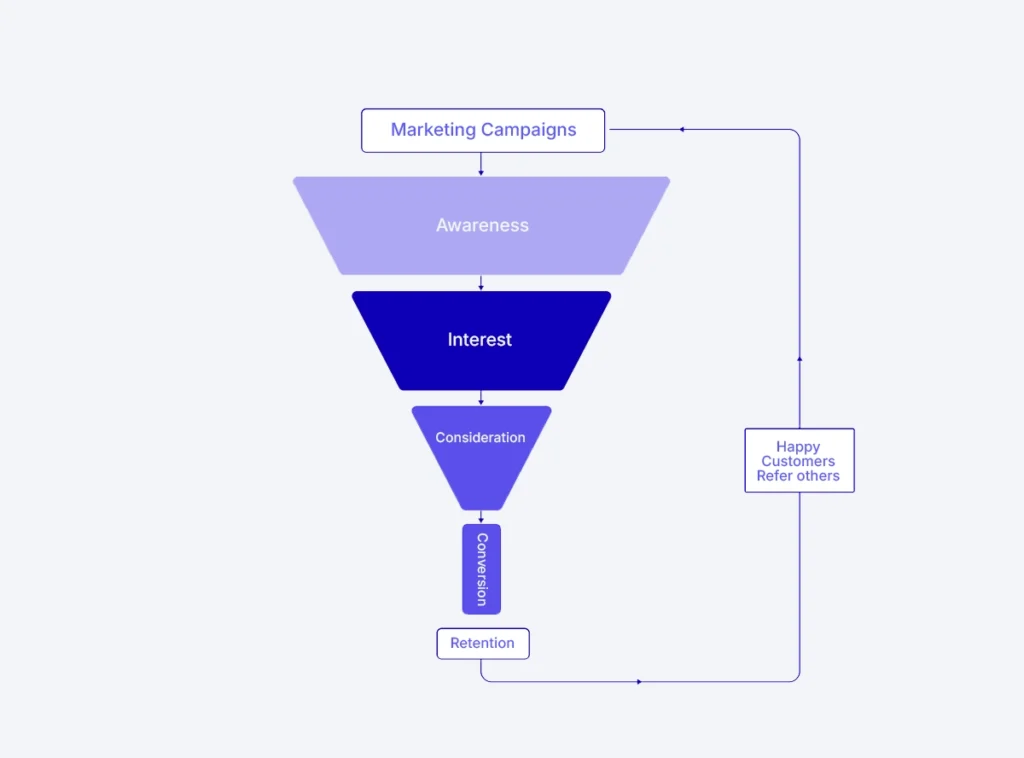
A major part of how we run ads with proper tracking involves analysing the entire customer journey rather than isolated campaign metrics. Instead of focusing only on clicks or impressions, we evaluate how users move through the funnel from the first interaction to the final conversion.
This process helps identify where users lose interest, which pages create friction, and which stages of the funnel require improvement. For example, a campaign generating strong click-through rates but weak conversions may indicate landing page problems rather than advertising issues. Similarly, high traffic with low-quality leads may reveal targeting problems rather than messaging issues.
Tracking the full funnel creates a clearer understanding of user behavior. It allows advertising decisions to be based on measurable insights instead of assumptions, leading to more stable campaign performance over time.
How We Run Ads With Proper Tracking for Google Ads
Google Ads campaigns perform significantly better when conversion tracking is configured properly. Advertising platforms rely heavily on conversion data to optimize campaigns and identify users who are more likely to take action.
For this reason, we configure detailed conversion tracking systems that measure form submissions, calls, landing page interactions, and other important conversion events. This allows campaigns to optimize toward actual business objectives rather than simply generating traffic.
Tracking also helps identify which keywords, audiences, and advertisements contribute most effectively to lead generation. Instead of making broad optimization decisions, campaigns can be refined based on precise performance insights.
This approach improves efficiency, reduces wasted spend, and supports more predictable lead generation.
How We Run Ads With Proper Tracking for Landing Pages
Landing pages play a critical role in advertising performance because they directly influence whether visitors convert after clicking an ad. Many businesses focus heavily on ad creatives while overlooking the importance of the post-click experience.
As part of how we run ads with proper tracking, landing page performance is continuously analyzed using engagement data such as bounce rates, user interaction behavior, form engagement, and session duration. This helps identify whether the landing page supports or blocks conversions.
A well-optimized landing page improves trust, reduces confusion, and creates a clearer conversion pathway for users. Even small improvements in landing page structure, messaging, or call-to-action placement can significantly improve campaign performance.
Common Ad Tracking Mistakes Businesses Make
Many businesses struggle with campaign optimization because tracking systems are incomplete or configured incorrectly. In some cases, campaigns run without proper conversion tracking entirely, making it impossible to measure lead quality accurately.
Other businesses focus only on clicks and impressions while ignoring conversion behavior. Some send paid traffic to generic pages that are not optimized for lead generation, while others fail to track important actions such as calls, form submissions, or inquiry events.
These gaps create major optimization problems because advertising decisions are made without reliable performance data. As a result, businesses often waste budget on campaigns that appear active but fail to generate meaningful outcomes.
The Difference Between Guesswork and Data-Driven Marketing
Without tracking systems, advertising becomes highly unpredictable. Businesses may pause campaigns too early, increase budgets unnecessarily, or make optimization decisions based on assumptions rather than actual user behavior.
Data-driven marketing changes this completely. Proper tracking provides measurable insights into campaign performance, audience behavior, conversion quality, and funnel efficiency. This allows optimization decisions to be based on evidence rather than speculation.
Understanding how we run ads with proper tracking helps businesses shift from reactive advertising toward a more strategic and measurable growth process.
What Happens When Ads Run Without Tracking
When advertising campaigns operate without proper tracking systems, businesses lose visibility into performance and optimization opportunities. Traffic may increase, but there is no clear understanding of whether campaigns are generating qualified leads or producing real return on investment.
This often leads to inconsistent lead generation, wasted ad spend, and difficulty scaling campaigns effectively. Businesses may believe their ads are underperforming when the real issue is lack of data visibility.
Proper tracking solves this problem by creating accountability across the entire funnel and providing the information required for continuous improvement.
Why Proper Tracking Improves ROI
Businesses that understand how we run ads with proper tracking are able to improve advertising ROI more effectively because optimization becomes far more accurate.
Tracking systems help reduce wasted spending, improve lead quality, strengthen conversion rates, and identify the highest-performing campaigns more efficiently. Instead of relying on assumptions, every adjustment is supported by measurable user data.
Over time, this creates a stronger advertising system where campaigns become more scalable, consistent, and cost-efficient.
Conclusion: Better Tracking Creates Better Advertising
Understanding how we run ads with proper tracking helps businesses see advertising as a measurable system rather than a collection of isolated campaigns.
Successful advertising is not only about generating visibility or increasing clicks. It is about understanding user behavior, measuring conversions accurately, and continuously improving campaign performance using real data.
When tracking systems, landing pages, audience targeting, and optimization strategies work together, advertising becomes significantly more predictable and effective.
The goal is not simply to drive traffic. The goal is to create a structured advertising system where every campaign contributes to measurable business growth and long-term performance improvement.