Why Social Media Alone Won’t Grow Your Business
The Missing Link Between Attention and Revenue
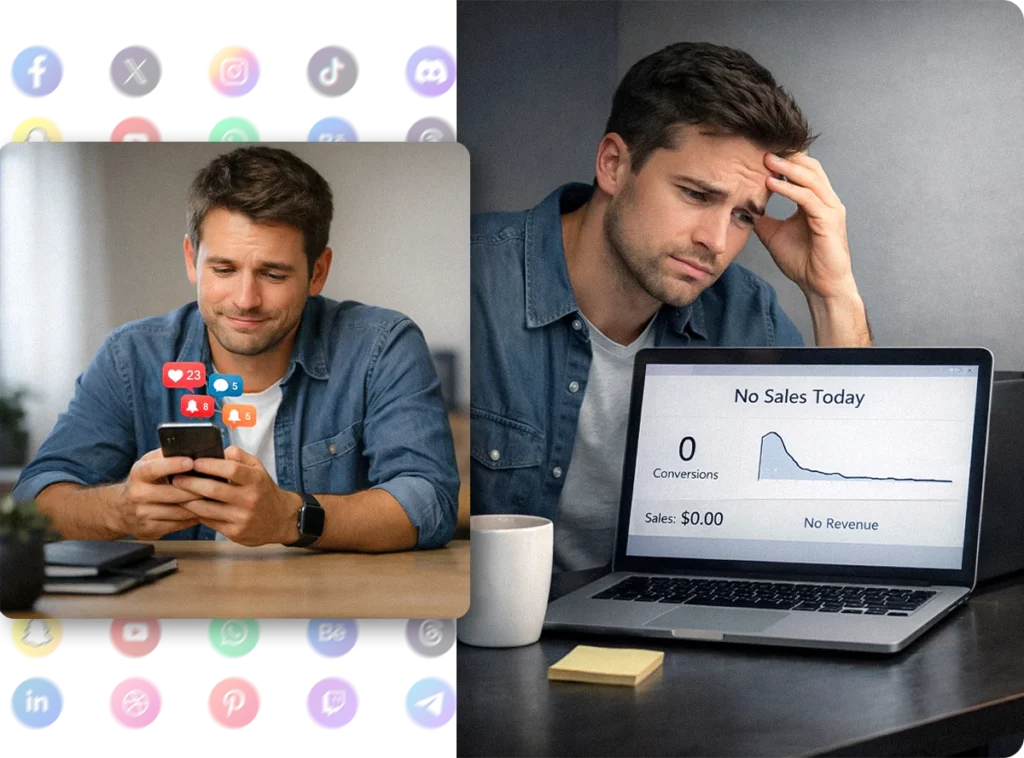
A practical breakdown of why social media activity rarely translates into consistent business growth on its own, and how most businesses mistake visibility for a functioning marketing system. This guide explains what social media actually does, where it falls short, and how it must be integrated into a complete funnel to generate real conversions and revenue.
Table of Contents
Introduction: The Social Media Myth
Social media has created one of the most persistent misconceptions in modern digital marketing: the belief that consistent posting alone can grow a business. Many brands assume that if they maintain an active presence on platforms like Instagram, Facebook, or LinkedIn, customers will naturally follow. This assumption leads to heavy investment in content creation without a structured system to convert attention into actual business outcomes.
The reality is that social media is primarily an attention platform, not a conversion engine. It can increase visibility, build familiarity, and support brand awareness, but it rarely drives predictable sales on its own. Businesses that rely exclusively on social media often experience inconsistent results because they are operating without a complete marketing system.
Understanding this distinction is critical. Growth does not come from visibility alone—it comes from structured pathways that guide users from awareness to action.
What Social Media Actually Does
Social media functions as a discovery and engagement layer within the broader digital ecosystem. It helps businesses reach new audiences, showcase their brand personality, and stay top-of-mind with potential customers over time. In many cases, it acts as the first point of contact between a user and a brand.
However, social media is not designed to complete the entire customer journey. It introduces interest but does not always facilitate structured decision-making. Users typically scroll, consume content passively, and move on without taking immediate action unless they are guided into a more focused conversion environment.
This is why social media is most effective when it is used as a traffic and awareness channel rather than a standalone sales system.
Why Social Media Rarely Drives Direct Sales
One of the main reasons social media struggles to generate direct sales is the nature of user behavior on these platforms. Users are not actively searching for solutions in most cases; they are browsing content for entertainment, information, or engagement. This passive mindset makes immediate conversion unlikely.
Another limitation is the lack of structured intent. Unlike search engines where users express clear demand, social media relies on interruption-based exposure. Even if a user is interested, they are often not in a decision-making mindset, which reduces conversion probability.
Additionally, most social media content does not provide a complete decision pathway. Users may see a post or reel, but without a clear funnel guiding them toward a landing page or offer, that interest fades quickly.
Common Mistakes Businesses Make on Social Media
Many businesses fail to see results from social media not because the platform is ineffective, but because of how it is being used within the overall marketing system.
Posting without funnel
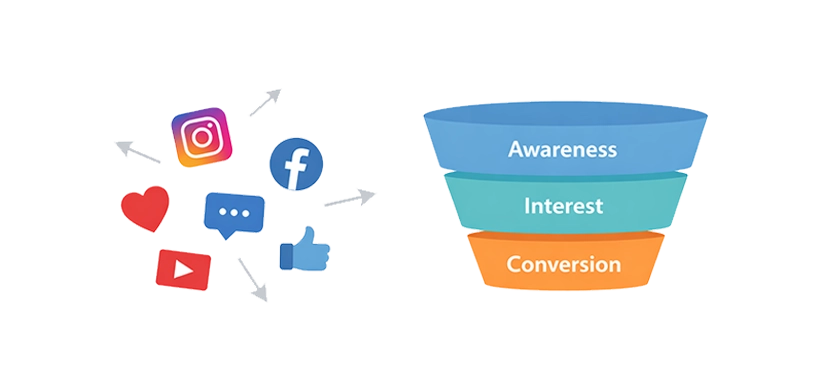
One of the most common mistakes is creating content without a defined funnel strategy. Businesses post regularly but do not guide users toward a next step such as a website visit, lead form, or booking page. As a result, attention is generated but never converted into measurable outcomes.
No call-to-action
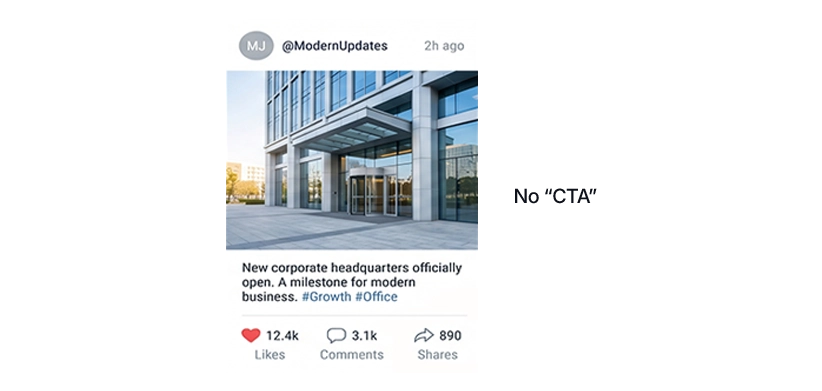
Another major issue is the absence of clear calls-to-action. Many posts are purely informational or promotional without directing users on what to do next. Without guidance, even interested users fail to take action, resulting in lost opportunities.
Vanity metrics focus
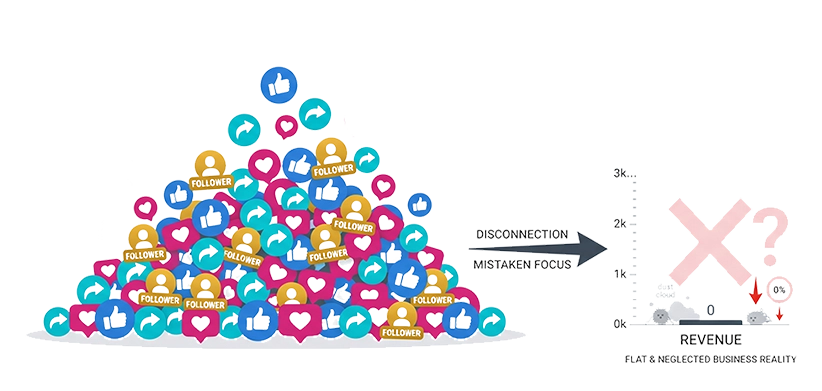
Businesses often focus on likes, shares, and followers instead of actual business impact. While these metrics indicate engagement, they do not necessarily reflect lead generation or revenue. This creates a false sense of success while underlying conversion performance remains weak.
The Missing Piece: Conversion Infrastructure
The real reason social media alone fails to grow most businesses is the absence of conversion infrastructure. This includes landing pages, funnels, lead capture systems, CRM integration, and follow-up automation.
Without this infrastructure, social media traffic has nowhere structured to go after engagement. Even if users are interested, there is no system designed to capture and nurture that interest into a conversion.
Conversion infrastructure acts as the bridge between attention and revenue. It ensures that every interaction has a defined next step and that no opportunity is lost after the first point of contact.
How Social Media Fits Into a Full Marketing Funnel
Social media becomes powerful only when it is integrated into a structured funnel rather than used in isolation. In a complete marketing system, social media plays the top-of-funnel role, where it introduces users to the brand and generates initial awareness.
From there, users are guided into deeper stages of the funnel where interest is built through landing pages, content, and remarketing systems. Finally, conversion happens when users are directed into a structured decision environment such as a service page, booking system, or lead form.
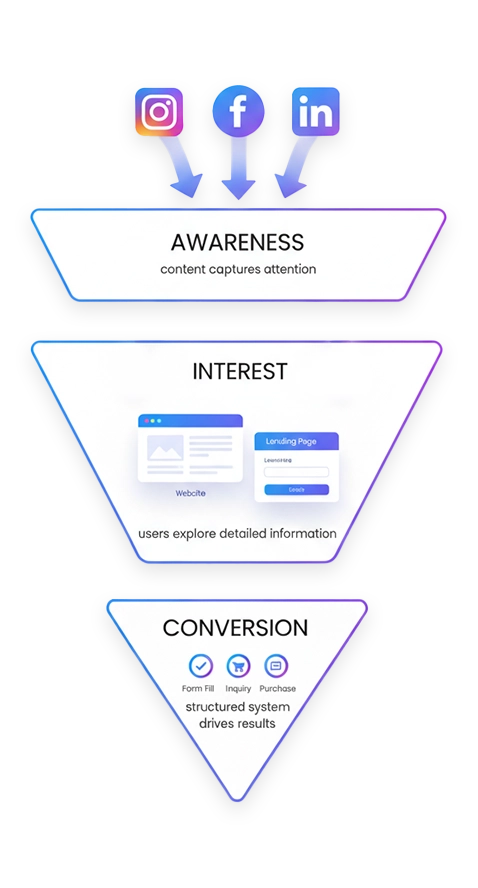
Awareness → Interest → Conversion
At the awareness stage, social media captures attention through content. In the interest stage, users are directed to more detailed information through websites or landing pages. Finally, in the conversion stage, structured systems convert that interest into measurable actions such as inquiries or purchases.
What You Should Do Instead
Instead of treating social media as a standalone growth channel, businesses should integrate it into a larger marketing system. This means every piece of content should have a defined purpose within a funnel, whether it is driving awareness, encouraging engagement, or directing users toward a conversion point.
Businesses should also ensure that social media traffic is always connected to optimized landing pages or websites that are designed for conversion. Without this connection, social media remains a visibility tool rather than a growth engine.
Additionally, implementing tracking and remarketing systems allows businesses to capture users who do not convert immediately and re-engage them through structured follow-up campaigns.
Real Example: Social Media Without Results
In many real-world cases, businesses maintain strong social media activity with consistent posting schedules, good engagement rates, and growing follower counts, yet see little to no impact on actual sales or lead generation.
The primary issue in these scenarios is not content quality but the absence of a structured funnel. Users engage with content but are never guided into a conversion system. There is no landing page flow, no lead capture mechanism, and no follow-up strategy.
As a result, social media becomes a branding activity rather than a revenue-generating system. While visibility increases, business growth remains stagnant.
Conclusion: Social Media Is Just One Piece
Social media plays an important role in modern digital marketing, but it is only one part of a much larger system. On its own, it is not designed to generate predictable business growth. Its true value emerges only when it is integrated into a structured funnel that includes landing pages, conversion systems, and follow-up mechanisms.
Businesses that treat social media as a standalone growth strategy often struggle with inconsistent results. In contrast, those that integrate it into a unified marketing system are able to convert attention into measurable outcomes more effectively.
Sustainable business growth does not come from any single channel. It comes from systems where every channel works together toward one clear objective: conversion.