

Compatibility depends on the platform edition, available interfaces, permissions, and workflow requirements. Airtable may serve as a supporting database or custom workspace rather than a traditional CRM.
Send agreed inquiry details from website forms to the right contact record or sales queue. Define required fields, source information, routing, and duplicate checks so your team receives useful information for follow-up.
Connect approved customer fields and subscription preferences with your email platform. We define which records should synchronize, how preferences are handled, and which events may trigger a message or audience update.
Connect relevant customer and order information where the platforms support it. The scope defines how purchases, updates, cancellations, and refunds affect connected records, helping teams understand the customer’s activity without unnecessary data duplication.
Connect agreed customer, order, stock, or accounting information with the systems your team uses. We define which records move, which system controls each field, and how updates or failed transfers are handled.
Turn agreed sales or customer events into tasks and handoffs. Define ownership, deadlines, required information, and completion conditions so the next team member knows what action is needed.
Send eligible website inquiries to the agreed CRM pipeline or owner. Field mapping, required information, and routing rules help distinguish a new sales inquiry from other submissions, with failed transfers flagged for review.
Match incoming details against agreed identifiers before creating or updating a contact. Define which fields can change and how conflicting information is handled, helping reduce duplicate records and accidental overwrites.
Use approved CRM events or fields to update email audiences and trigger relevant messages where supported. Subscription preferences, exclusions, and stop conditions are included in the workflow so messages follow the agreed customer journey.
Create tasks, reminders, or stage updates when defined conditions are met. Keep human review where judgment is needed, and document the rules so your team understands why an opportunity changed or a follow-up was assigned.
Start agreed onboarding steps after a confirmed customer event. This can include welcome messages, internal tasks, resource delivery, or handoffs, with timing and ownership defined so staff can review progress and handle exceptions.
Notify the appropriate person when an inquiry arrives or a defined customer event occurs. We agree on the channel, information included, and escalation conditions so alerts help staff respond without creating unnecessary notification volume.
Assign routine work from agreed triggers, with clear owners and completion conditions. We identify where automation saves effort and where staff approval remains useful, then test the workflow against common scenarios and exceptions.
We agree on the operational problem, required fields, and intended outcome before choosing an integration method. That helps avoid connecting tools without a clear purpose.
Field mapping, duplicate checks, and update direction are documented. Your team can see which system owns important information and how changes affect connected records.
Testing covers the agreed normal workflow and relevant failure scenarios. Missing fields, duplicate submissions, and unavailable services need a defined response, not an assumption that every transfer succeeds.
We explain the workflow, account responsibilities, monitoring, and support arrangements. The handover identifies what staff can manage and when technical help may be needed.
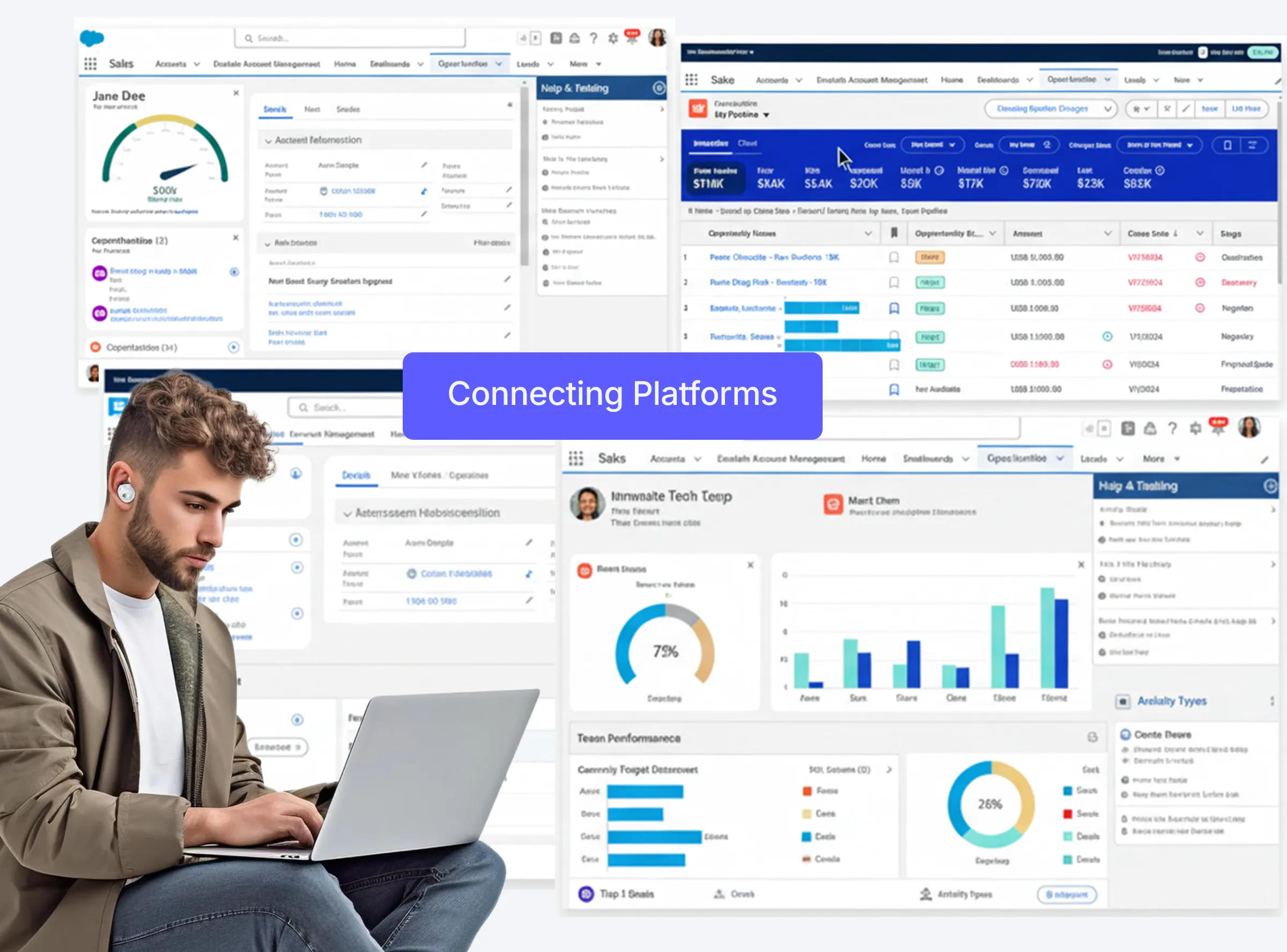
A CRM creates greater value when it connects with the digital systems that generate and use customer data. Integrate it with professional website design, connect customer and order workflows through e-commerce development, or include it within a broader small-business growth strategy.
We discuss where information originates, who uses it, and which repeated tasks cause problems. Current tools and sample scenarios help define the work the integration needs to support.
We review supported connectors or APIs, account permissions, subscription requirements, and relevant limits. This establishes what can be connected and identifies dependencies before the scope is confirmed.
We define fields, identifiers, update direction, duplicate handling, and workflow conditions. Where migration is included, we also agree on the records to transfer and how accuracy will be checked.
We configure or develop the agreed connections and automations. Access arrangements, exception handling, and monitoring are included according to the project’s requirements.
We test representative records and agreed scenarios, review the results with your team, and plan the rollout. Any cutover or downtime requirements are communicated before changes affect daily work.
We explain how the workflow operates, how to recognize a problem, and who handles support. Documentation records the agreed connections, responsibilities, and maintenance requirements.
Explore selected projects showing how CRM planning, system connections, structured data, workflow automation, and careful testing can support more organized customer and operational processes.











Why People Leave Your Website Quickly Introduction First impressions online happen in seconds. When visitors arrive, they decide almost instantly...

Why Most Agencies Don’t Connect Your Systems (And Why It Matters) Introduction You hired a marketing agency to grow your...

How Systems Connect Everything Together A practical breakdown of how systems connect everything together in digital marketing and why businesses...

How We Plan a Digital System A practical breakdown of how we plan a digital system and why structured digital...

How We Run Ads With Proper Tracking A practical breakdown of how we run ads with proper tracking and why...

Why Your Ads Don’t Bring Consistent Leads A practical breakdown of why your ads don’t bring consistent leads and why...

Why Your Google Ads Get Clicks But No Leads A practical breakdown of one of the most frustrating problems in...
Find clear answers about compatible systems, data migration, project costs, implementation timelines, testing, and access requirements.
Review your current tools, repeated tasks, and customer-data handoffs.
Get a practical starting point for an integration or automation project.
Your information is secure and never shared.