How Long Does SEO Take for a Local Business?
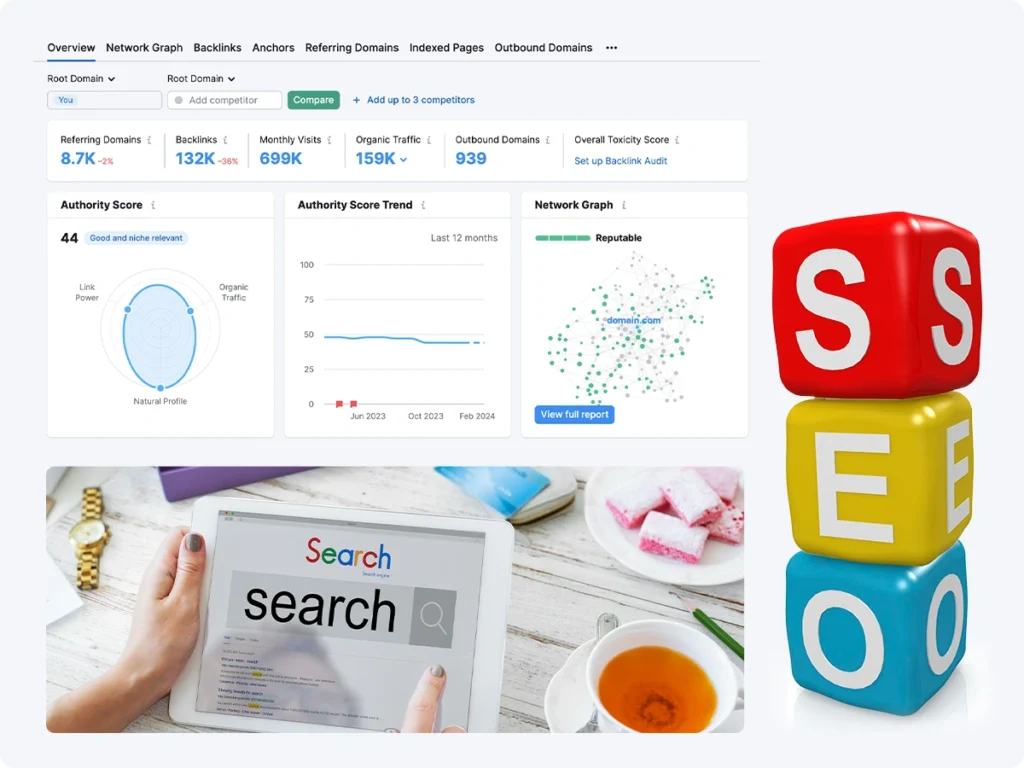
If you’ve just started investing in SEO, you’ve probably checked your rankings every other day, hoping to see your business jump to the top of Google. Then a month goes by. Then two. And you’re left wondering if it’s even working.
Here’s the direct answer: most local businesses start seeing measurable SEO results in 3 to 6 months, with significant, durable gains showing up between 6 and 12 months. Google’s own search advocates put the realistic window at 4 months to a year before SEO delivers meaningful benefit. That’s not a sales pitch it’s how search engines are built to work.
This guide breaks down exactly what happens at each stage of a local SEO timeline, what speeds it up, what slows it down, and what you should expect to see month by month so you can set realistic goals instead of guessing.
Table of Contents
The Short Answer: 3-6 Months for Initial Results, 6-12 for Real Growth
For most local businesses, here’s the realistic breakdown:
| Timeframe | What You Can Expect |
| 0-3 months | Technical fixes, Google Business Profile setup, on-page optimization, keyword research |
| 3-6 months | Early ranking movement, more impressions in Google Search Console, local pack appearances |
| 6-12 months | Noticeable traffic growth, leads from organic search, page-one rankings for core local keywords |
| 12+ months | Compounding authority, consistent lead flow, ability to expand into new keywords and locations |
Maile Ohye, a former Google webmaster trends analyst, put it plainly: SEOs typically need four months to a year to implement improvements and start seeing the benefit. Google’s John Mueller has echoed this, noting that simple changes get reprocessed quickly, but larger structural or strategic changes take much longer to show up in rankings.
If someone promises you page-one rankings in two weeks, that’s a red flag, not a shortcut. Real SEO growth is gradual because Google is designed to reward consistency and trust over time, not short-term spikes.
Why SEO Isn’t Instant: How Google Actually Processes Changes
To understand the timeline, it helps to understand what’s actually happening behind the scenes when you “do SEO.”
When you optimize a page, fix a technical issue, or publish new content, here’s the sequence Google has to go through:
- Crawling – Googlebot has to discover and revisit your page. This alone can take anywhere from a few days to several weeks, depending on how often Google crawls your site.
- Indexing – Once crawled, Google has to process and store the page in its index. Not every page gets indexed immediately, and some don’t get indexed at all if quality signals are weak.
- Ranking evaluation – Indexed pages are then evaluated against hundreds of ranking factors, compared with competing pages, and tested against real user behavior (click-through rate, time on page, bounce rate).
- Trust accumulation – For newer sites or pages, Google needs to observe consistent quality and relevance signals over time before fully trusting where to rank you. This is part of why new websites often take longer than established ones.
According to Google’s explanation, simple changes like updates to page text are recrawled and reprocessed fairly quickly, while bigger, more strategic changes to a website take much longer to fully process. That’s the core reason there’s no single, fixed timeline, it depends on the size and type of the changes you’re making.
This is also why a strong technical foundation matters so much from day one. If your website is slow, poorly structured, or hard for search engines to crawl, every other SEO effort is working against friction instead of with it.
Local SEO Timeline: Month-by-Month Breakdown
Here’s a realistic, phase-by-phase look at what a local SEO campaign typically looks like.
Months 1-3: Foundation Phase
This is the setup stage, and it’s the most important one to get right.
- Technical SEO audit (site speed, mobile usability, crawl errors, broken links)
- Keyword research focused on local search intent (“near me,” city/neighborhood modifiers, service + location terms)
- Google Business Profile optimization (categories, hours, photos, service areas, posts)
- On-page SEO: title tags, meta descriptions, header structure, internal linking
- NAP (Name, Address, Phone) consistency across directories and citation sites
During this phase, you likely won’t see major ranking jumps yet. You might notice more pages getting indexed in Google Search Console, slight increases in impressions, or early local pack appearances for low-competition terms. That’s normal these are leading indicators, not the finish line.
Months 3-6: Early Traction Phase
This is when things typically start to move.
- Mid-funnel and long-tail local keywords begin ranking on page one or two
- Google Business Profile starts generating calls, direction requests, or website clicks
- Organic impressions and click-through rate increase in Search Console
- Local pack visibility improves for less competitive search terms
Industry data backs this up for a large share of businesses, it takes about 3 to 6 months for an SEO strategy to deliver noticeable results. This is also the point where many businesses get nervous and pull back, which is usually the worst time to stop.
Months 6-12: Growth and Compounding Phase
- Core service + location keywords (“plumber in [city],” “dentist near [neighborhood]”) start ranking in the top 10
- Organic traffic becomes a measurable, repeatable lead source
- Cost per lead from organic search typically drops compared to paid channels
- Content and backlinks built earlier begin compounding in authority
This is the phase where local SEO starts to outperform other channels on cost efficiency. The early work technical fixes, content, citations has had time to accumulate trust signals.
12+ Months: Authority and Expansion Phase
- Rankings stabilize and become more resistant to algorithm updates
- You can expand into new service areas, neighboring cities, or additional service keywords faster, because your domain has established credibility
- New content tends to rank faster than it did in month one, since Google already trusts the site
Ahrefs’ large-scale study of ranking pages [https://ahrefs.com/blog/how-long-does-it-take-to-rank-in-google-and-how-old-are-top-ranking-pages/] found that the average top-10 ranking page is over two years old, and only about 5.7% of newly published pages reach the top 10 within their first year. That’s not meant to discourage you it’s meant to set the right expectations so 6 months doesn’t feel like failure when it’s actually right on schedule.
Factors That Affect How Fast Your Local Business Ranks
Not every business moves through this timeline at the same speed. These are the biggest variables:
1. Website age and history A 5-year-old site with some existing authority will generally see results faster than a brand-new domain, simply because Google already has trust signals to work with.
2. Local competition A roofer in a small town with five competitors will rank faster than a roofer in a major metro with fifty active competitors running SEO campaigns. Local service businesses in competitive metro areas should plan for a longer runway.
3. Technical health of the site Slow load times, broken links, duplicate content, or poor mobile usability all slow down crawling and hurt rankings regardless of how good your content is.
4. Content quality and consistency One-off blog posts rarely move the needle. Search engines reward businesses that consistently publish genuinely useful, well-structured content over time.
5. Backlink profile Quality backlinks from relevant, reputable sites still signal authority and trust. A handful of strong, relevant links outperforms dozens of low-quality ones.
6. Google Business Profile activity For local businesses specifically, an active, well-optimized, review-rich Google Business Profile often moves faster than organic web rankings alone, since the local pack operates on a slightly different set of signals.
7. Industry type “Your Money or Your Life” (YMYL) industries like healthcare, legal, and finance face stricter scrutiny and typically take longer to rank than lower-stakes local categories like restaurants or home services.
Local SEO vs. National SEO: Why Local Businesses Often Move Faster
Here’s some good news if you’re a local business: local SEO is often faster to show results than broad, national SEO campaigns.
| Local SEO | National SEO | |
| Competition | Limited to businesses in your service area | Competing against businesses nationwide |
| Key ranking factor | Google Business Profile + proximity + relevance | Domain authority + content depth + backlinks |
| Typical time to traction | 3-6 months | 6-12+ months |
| Keyword competition | Lower for “near me” and city-specific terms | Higher for broad, high-volume terms |
Because local search results are filtered by geography, you’re not competing with every business in the country just the ones operating in your service area. This is why a well-optimized local SEO strategy paired with a strong Google Business Profile can produce visible local pack results faster than a comparable national keyword campaign.
What You Can Do to Speed Up Your SEO Timeline
While there’s no way to bypass Google’s trust-building process entirely, these actions genuinely shorten the runway:
- Fix technical issues early. Crawl errors, slow load speeds, and poor mobile experience all create friction that delays everything else.
- Publish consistently, not sporadically. A steady publishing cadence builds topical relevance faster than occasional bursts of content.
- Prioritize Google Business Profile optimization. Photos, posts, accurate categories, and review responses all influence local pack visibility.
- Build internal links strategically. Link new pages from high-authority sections of your site like your homepage or main navigation to help Google discover and prioritize them faster.
- Earn reviews consistently. Review volume and recency are meaningful local ranking signals, not just trust signals for customers.
- Target realistic keywords first. Ranking for lower-competition, highly specific local terms first builds momentum and trust before you go after harder, high-volume keywords.
- Track and adjust, don’t “set and forget.” SEO isn’t a one-time project. Continuous monitoring and refinement is what separates businesses that compound their results from those that plateau.
This is also where a connected approach pays off. When your website, content, and search strategy are managed together instead of as disconnected tasks, technical fixes and content efforts reinforce each other instead of working in isolation.
Common Local SEO Timeline Mistakes to Avoid
Expecting page-one rankings within weeks. Unless you’re targeting an extremely low-competition, hyper-specific term, this almost never happens and if an agency promises it, treat that as a warning sign rather than reassurance.
Quitting at month 3 or 4. This is exactly when early traction starts to build. Stopping here means losing the compounding benefit of the work already done.
Chasing volume over quality. Publishing more thin, generic content doesn’t speed things up. One well-researched, genuinely useful page tends to outperform a dozen mediocre ones.
Ignoring technical SEO. No amount of content will outrun a slow, poorly structured, hard-to-crawl website. This is one of the most common reasons businesses feel like their SEO approach “isn’t working” even after months of effort.
Treating SEO and the rest of your digital presence as separate projects. Search, content, and your website are deeply connected. A unified digital strategy tends to outperform isolated, piecemeal efforts.
SEO vs. Paid Ads: Which Should You Use While You Wait?
Because SEO takes months to build momentum, many local businesses run paid search alongside it to generate leads in the short term while organic growth compounds in the background.
- Paid ads generate visibility and leads almost immediately, but that visibility disappears the moment you stop paying.
- SEO takes longer to build, but the visibility you earn tends to be more durable and typically produces a lower cost per lead over time.
Running both isn’t an either/or decision it’s a sequencing strategy. Paid campaigns can cover the gap while your organic foundation is being built, and the comparison between SEO and ads often comes down to your timeline and budget rather than one being categorically better than the other.
How to Know If Your SEO Strategy Is Actually Working
Rankings alone don’t tell the full story, especially in the early months. Track these instead:
- Search Console impressions : Are more people seeing your pages in search results, even if clicks haven’t caught up yet?
- Indexed pages : Are your new pages actually getting indexed?
- Local pack appearances : Is your Google Business Profile showing up for relevant local searches?
- Organic traffic trend (not day-to-day) : Look at month-over-month trends, not daily fluctuations.
- Lead quality and source : Are organic visitors actually converting into calls, form fills, or bookings?
If your fundamentals are solid, these metrics should show gradual, consistent movement not overnight spikes. As Google’s own guidance puts it, SEO progress should be measured in trends over months, not day-to-day swings.
Need Help Setting Realistic SEO Expectations for Your Business?
SEO timelines vary based on your industry, competition, and starting point which is exactly why a generic answer rarely fits. If you want a clear, honest assessment of what to expect for your specific business, our team can walk through your current site, local competition, and goals to build a realistic roadmap.
Book a Strategy Session and we’ll show you exactly where you stand and what a realistic timeline looks like for your market.
FAQs: How Long Does SEO Take for a Local Business?
How long does SEO take to show results for a small business? Most small businesses begin seeing measurable results like increased impressions, early keyword movement, or local pack appearances within 3 to 6 months. More significant traffic and lead growth typically shows up between 6 and 12 months.
Can local SEO work faster than national SEO? Often, yes. Local SEO benefits from geographic filtering, meaning you’re competing with fewer businesses than you would in a national campaign. A strong Google Business Profile can also generate local pack visibility faster than organic web rankings alone.
Why hasn’t my SEO worked after 3 months? Three months is still early in a typical SEO timeline. It’s normal not to see major ranking jumps yet this phase is usually focused on technical fixes, content foundations, and indexing. If there’s been zero movement in impressions or indexed pages by month three, it’s worth auditing your technical SEO and content strategy.
Does a new website take longer to rank than an established one? Generally, yes. Established websites already have accumulated trust signals, backlink history, and crawl patterns that newer sites haven’t built yet. New sites typically need several months longer to reach the same level of ranking stability.
Is it normal for rankings to fluctuate during the first year? Yes. Google’s systems are still calibrating where your site belongs in search results during the first year, which often causes more visible ranking fluctuation than you’d see on an established, older site.
How much does industry competition affect my SEO timeline? Significantly. A local business in a low-competition niche or smaller market can see results faster than a business competing against dozens of established competitors actively investing in SEO in a major metro area.
Should I pause SEO if I don’t see results right away? No. Pausing SEO early especially within the first 3 to 4 months typically resets momentum rather than saving money, since much of the value compounds over time.
Looking for a clearer picture of what SEO could realistically do for your business? Contact Luniea today and we’ll map out a timeline based on your industry, competition, and goals.